Victorian post boxes
The first British wayside letter boxes were erected in the Channel Islands in 1852. The idea was adopted on the mainland the next year and the first UK box appeared in Botchergate Carlisle during 1853. They rapidly spread throughout the land, mostly in cities.
Our collection covers the earliest mainland types from 1861 up to the death of Victoria in 1901. It was a time of innovation and many changes in the design as different ideas were tried and rejected or accepted for further development. By the end of the century, the modern wall box and pillar box had arrived.
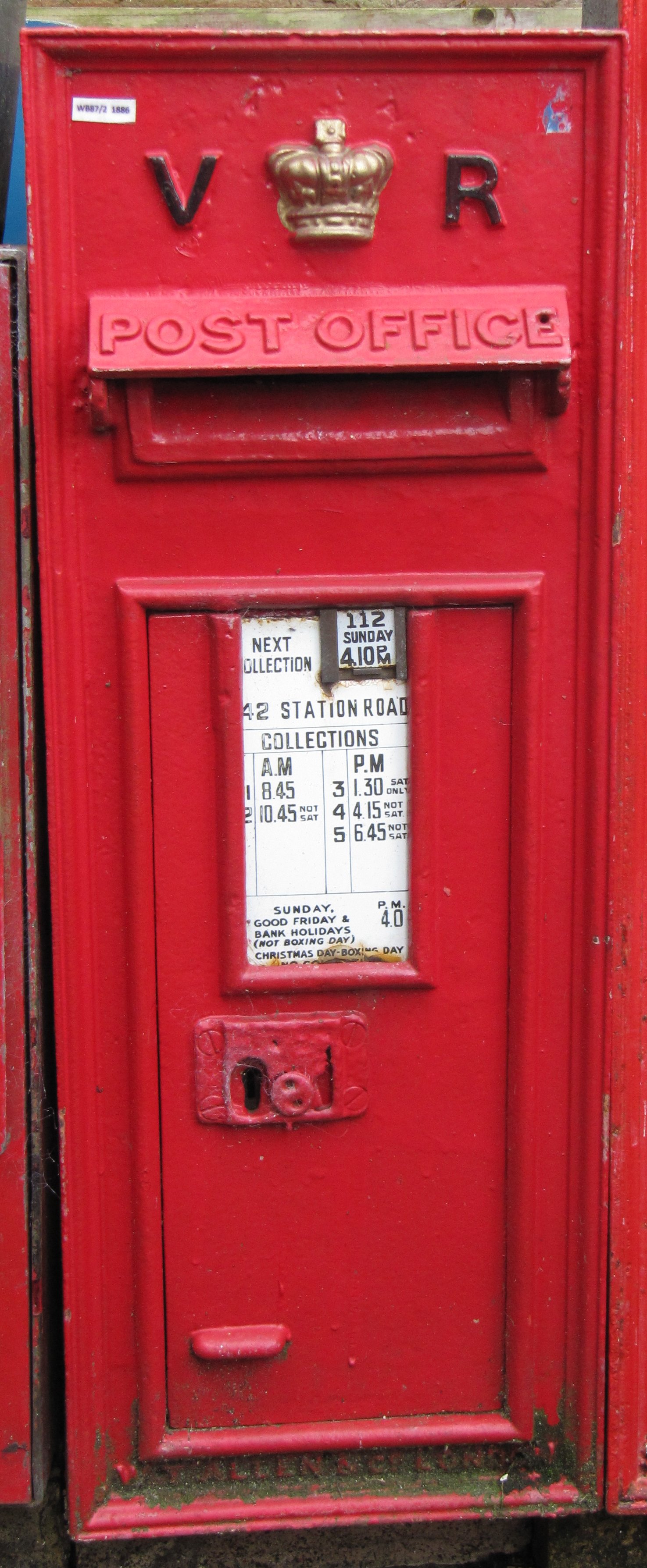
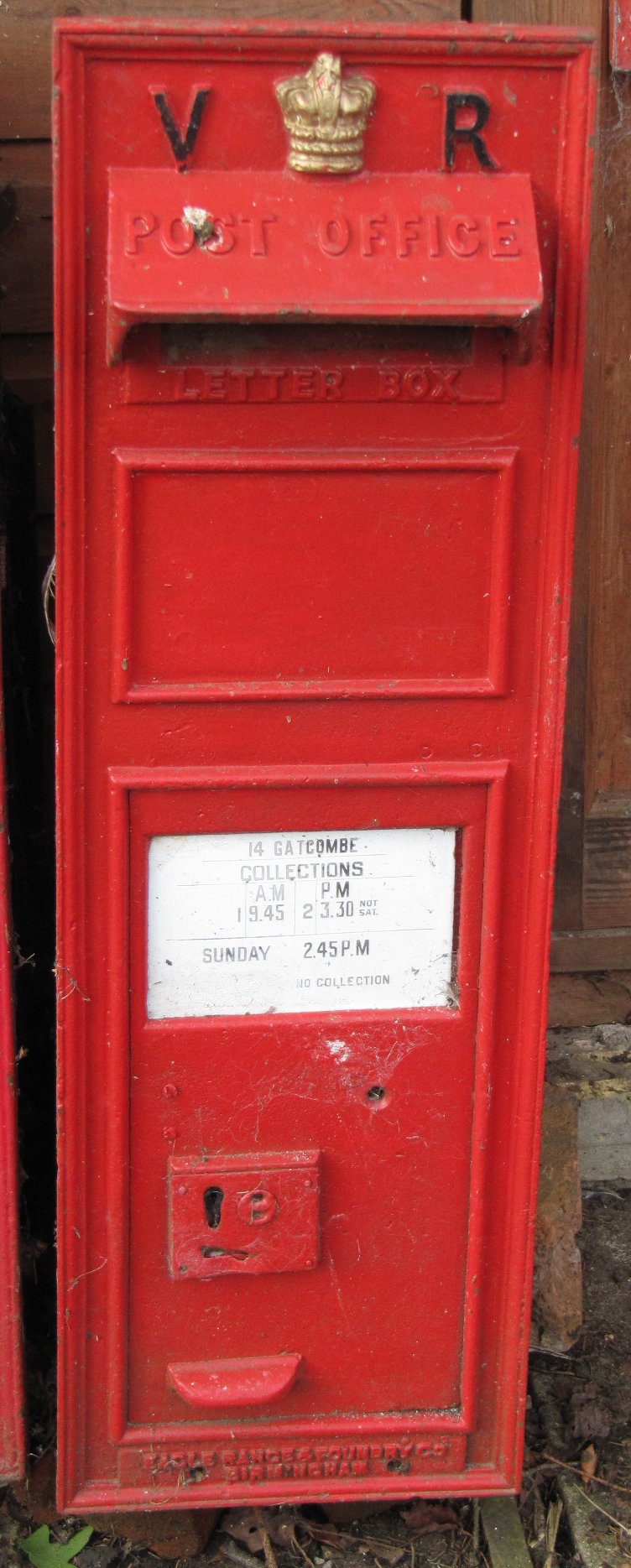
Our earliest box is the "Second National StandardWall Box No. 2" by Smith & Hawkes foundry of Birmingham. It was cast in 1859. Our fabulous Penfold is an exact replica of a Victorian hexagonal pillar box of 1866, named after the architect J. W . Penfold. Here you can also see the attractive Jubilee Pillar of 1887 and an unusual brass and tin letter box for use in a Victorian country house.
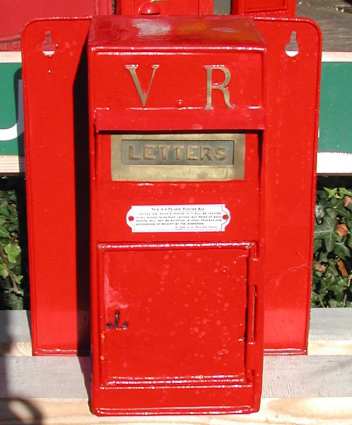
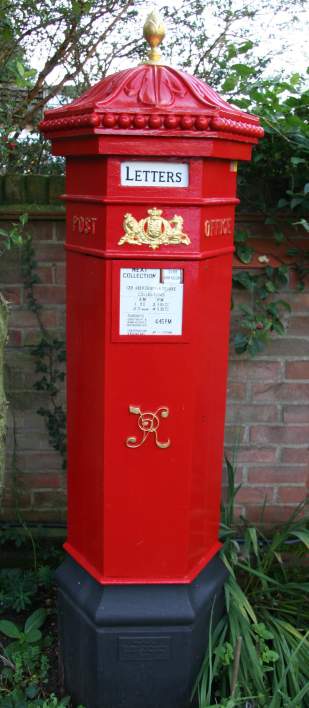
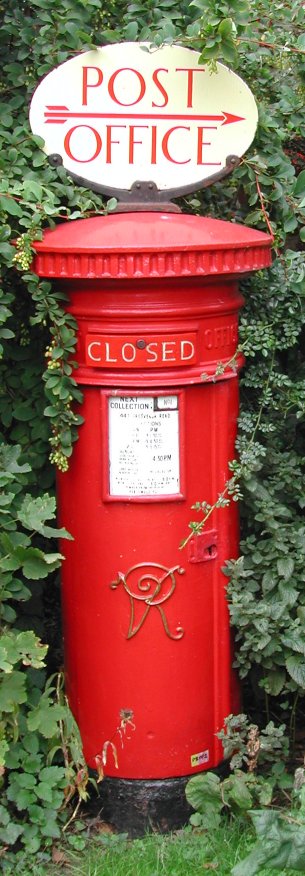
The Jubilee pillar box on the right, carrying an original Victorian cast iron Closure Plate, has an interesting history. It was taken out of service in the early 1970s after a collision with a vehicle which snapped it off its base. It was later donated by Royal Mail to George Corner of Batley, known as the Wogglehopper.
Further Victorian examples
The Museum has a strong Victorian holding. The galleries below show further wall boxes and related pieces from the same reign.
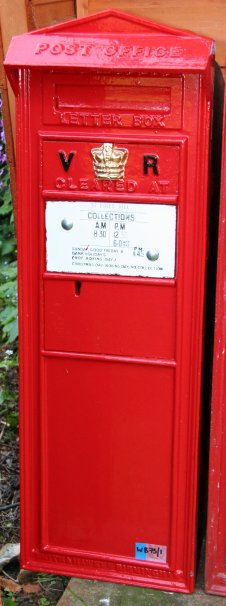
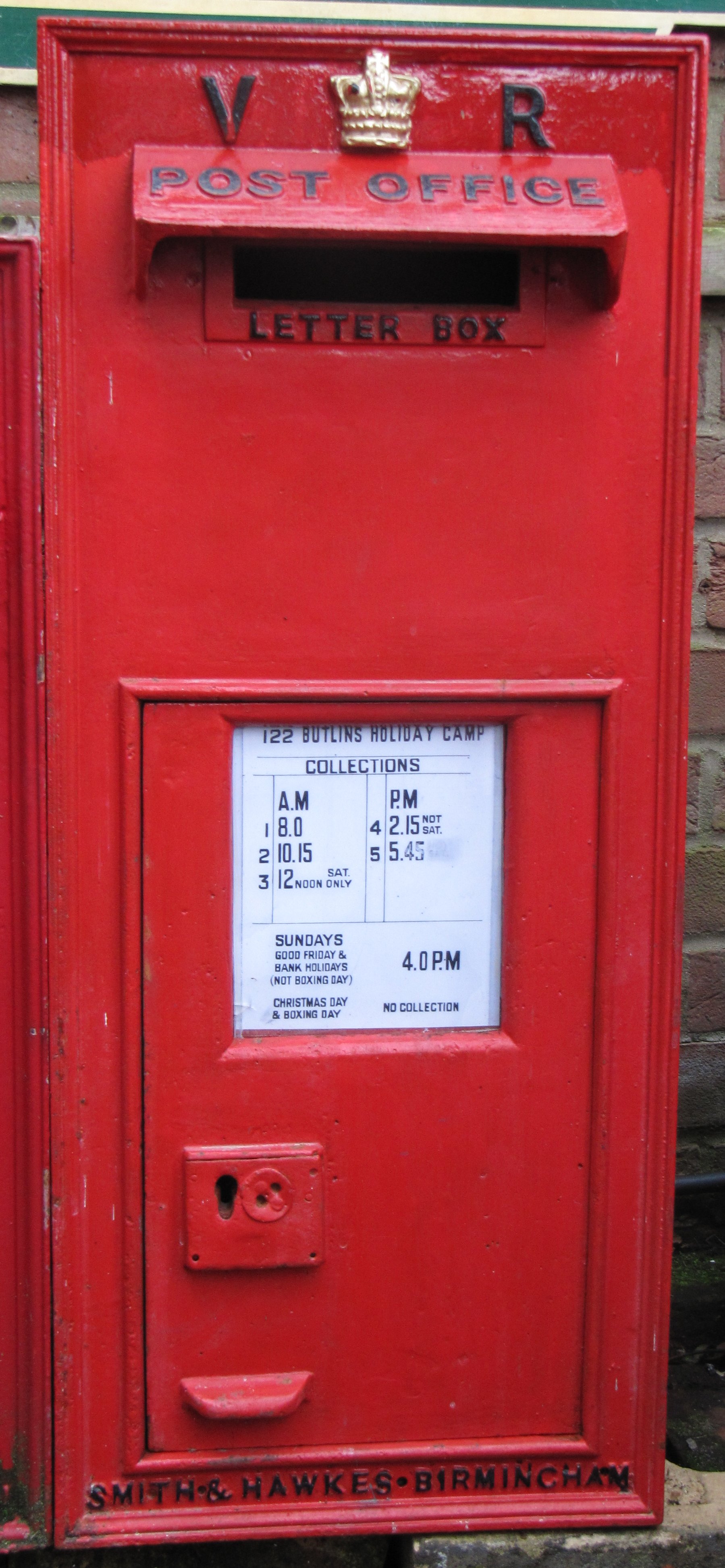
On the left you can see our oldest box, this superb Second National Standard No.2 Small Wallbox by Smith & Hawkes of Birmingham. Made in 1859, they were an improvement on the First National Standard with a flap and the delightful Pedimented Hood to help keep the rain out. There are still around 30 of these on the streets and several in museum collections. When first introduced, this box would have been painted bronze green. It was not until 1860 that red started to appear and it took a full ten years to repaint all of the boxes around the country.
Our 2nd National Standard was one of three originally owned by Bill Sait, a prodigious collector who sadly died in 1997. We now have six of Bill's 116 boxes in the collection, all either Victorian or Edwardian.
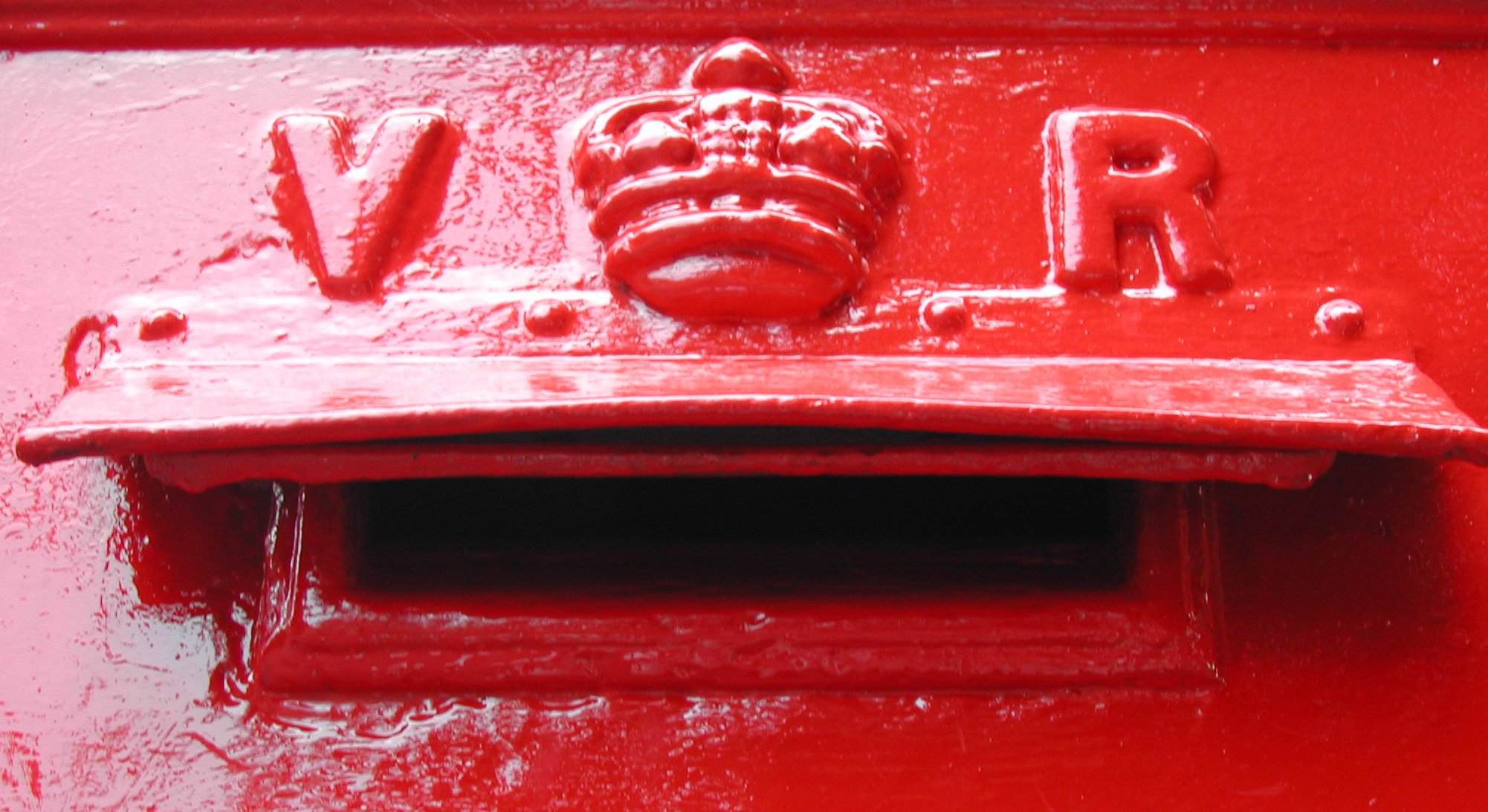
Below left is a line up of early Victorian wall boxes. Yes, I know it says "GR" on that one, but believe me, it is Victorian. In fact it is unique and was formerly located at Wrexham in Clywd. At some point the VR cipher was ground off and the replacement letters GR were screwed on. No one really knows why, and it is the only box known in this condition in the UK. It was made by Bernard P Walker at the Eagle Foundry in Birmingham in 1880 (WB82/5). We have recently acquired an "unmodified" version of the box which is on display, although not shown here.
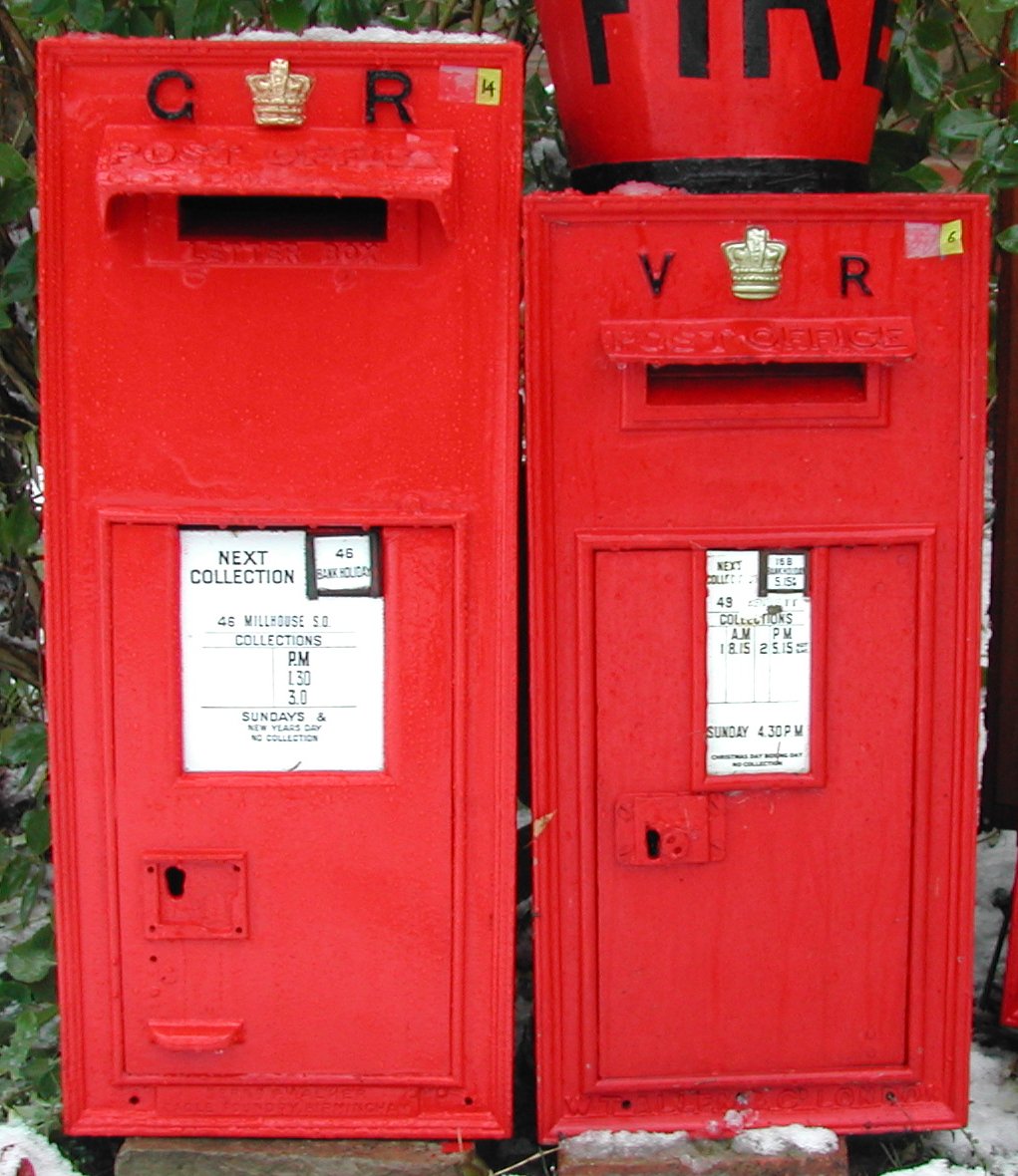
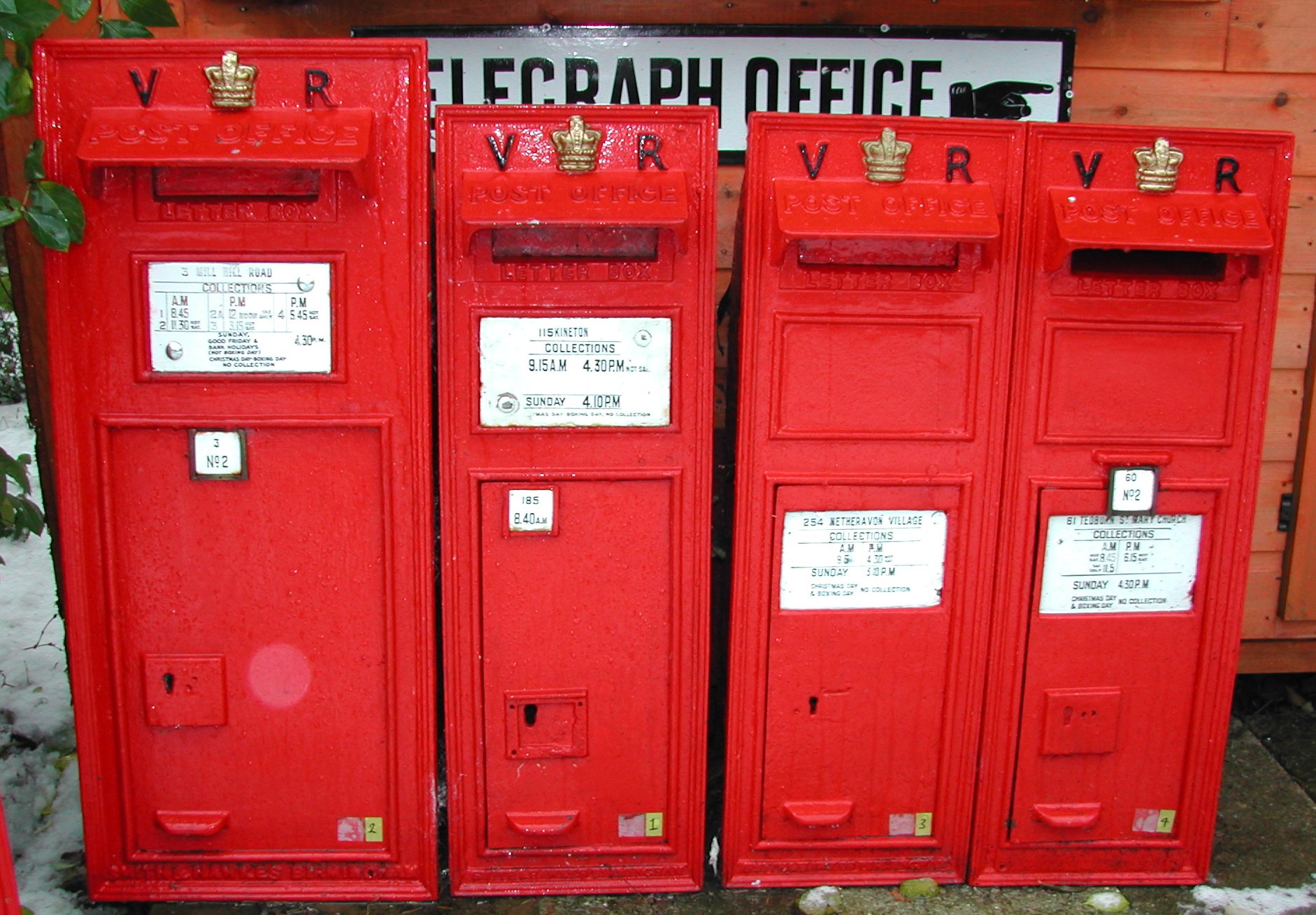
WB77 Smith & Hawkes No.1 Large size of 1861
WB78 Smith & Hawkes No.2 Small of 1861
WB 83/1 Smith & Hawkes type C of 1871
WB 83/2 Bernard P Walker type C of 1874
Originally there were just two sizes of wall box "Large No.1" and "Small No.2 ", but by 1871 the very large wall box had been introduced and this became Type A. The old No 1 became Type B and the old No.2 became Type C. You can see our large A size box below. In the picture above the smaller boxes show some interesting changes as the collection time plate moves from a position at the top of the box to the door. This made it easier to remove the plate for changes or replacement. The tablet holders on all of these are later additions. Incidentally, Smith & Hawkes, Bernard P Walker and Eagle Range & Foundry Co are actually the same factory in Birmingham; it just changed hands rather frequently during this period!
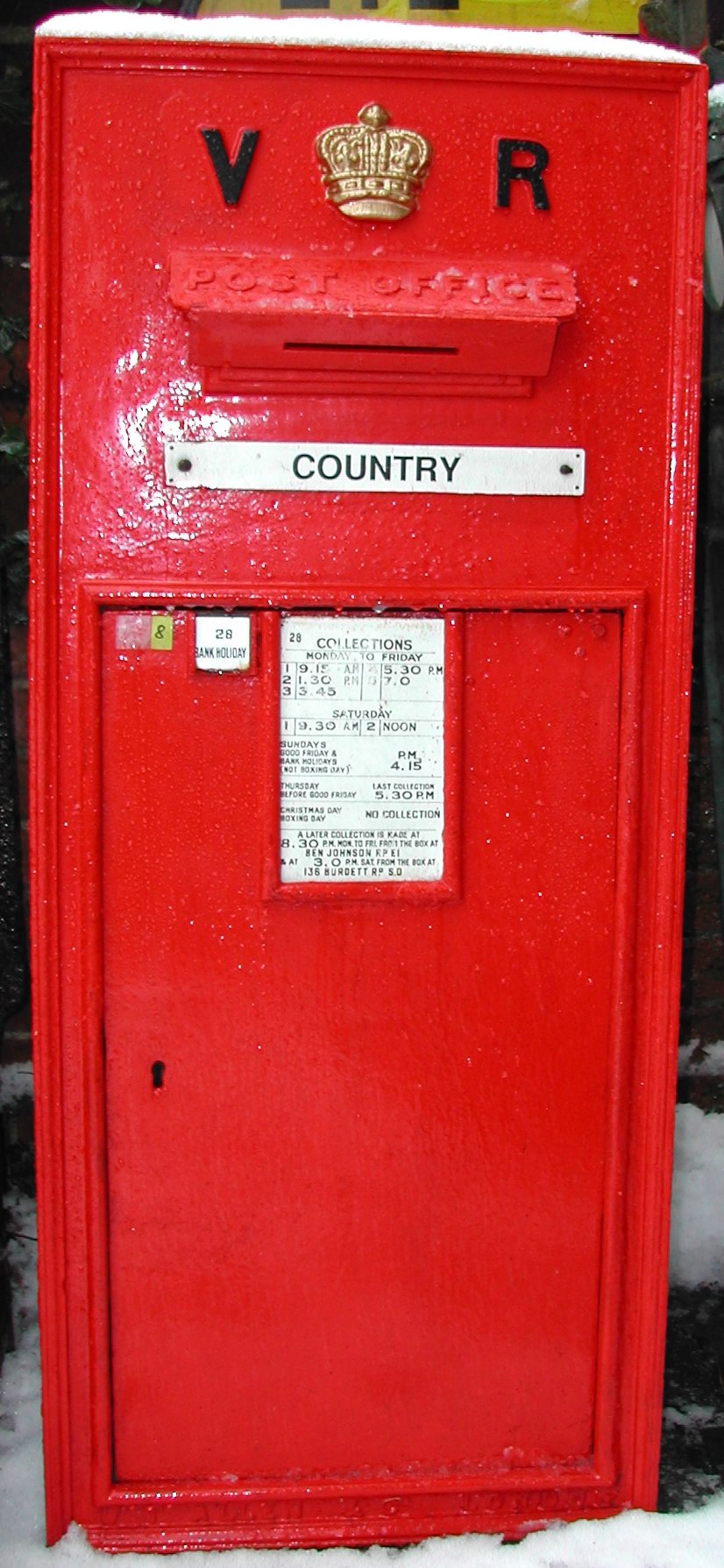
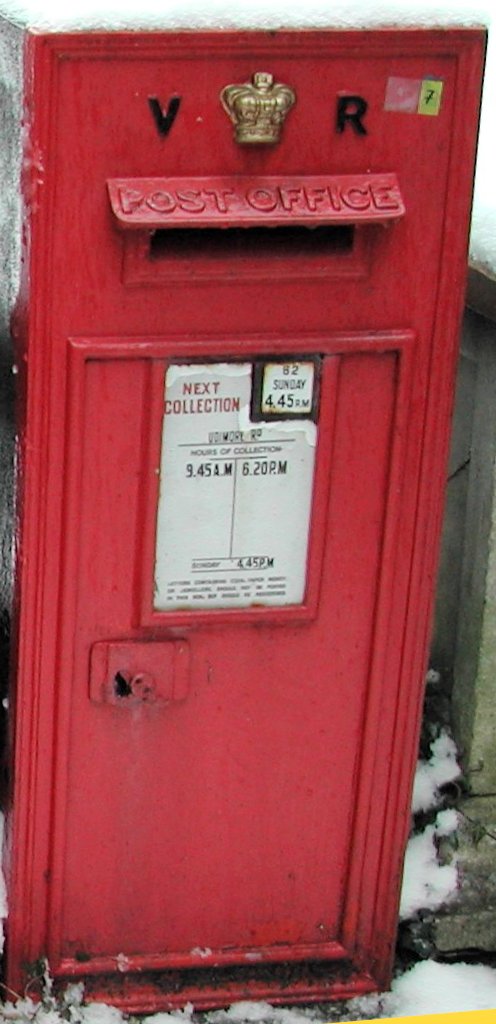
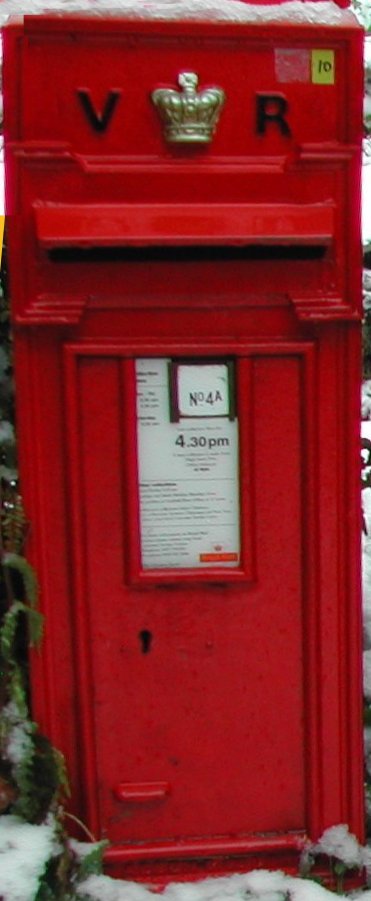
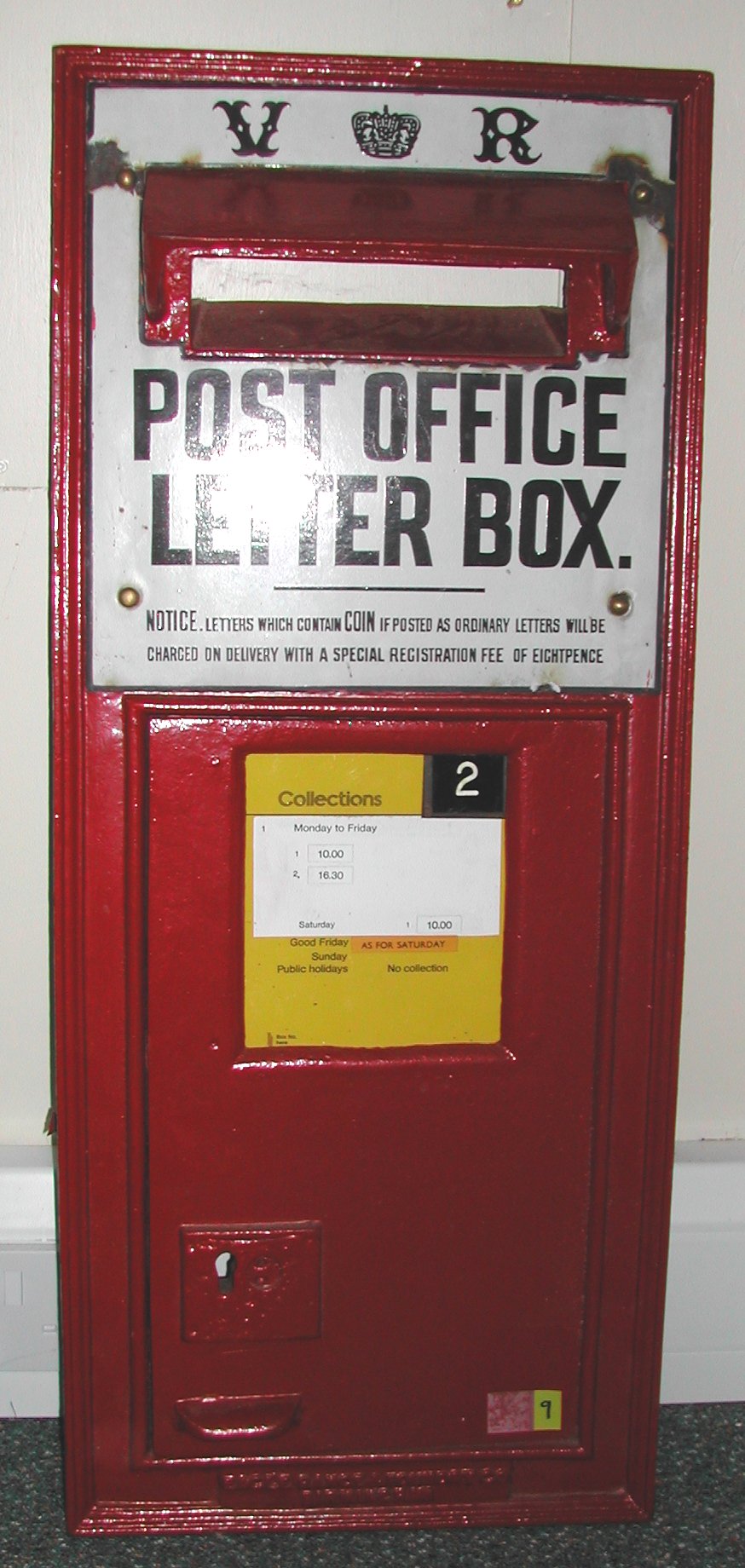
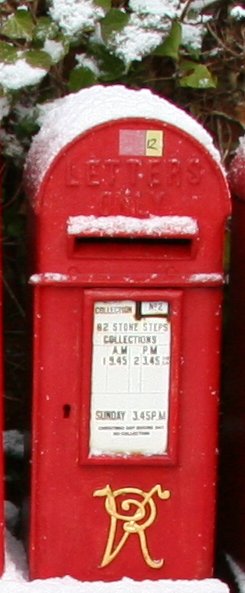
Above left you can see the A, B and C size boxes in roughly the right proportions to each other. Notice on the small C size box the aperture has been modified to accept larger envelopes. That was a 1960s modification to 10,000 mostly Victorianand Edwardian boxes accomplished over three years by one man with a Land Rover and an oxyacetylene torch! And to close this section, I've included the superb Victorian "Ludlow" front by Eagle Range & Foundry with enamel plate by Chromo of Wolverhampton (LWB152/2) and the cute little Victorian lamp post mounted box (LB202). An earlier version had the "Only" omitted and is extremely rare, just one example is left in service in deepest Kent. You can see more Ludlows in their special section here.
Latest additions
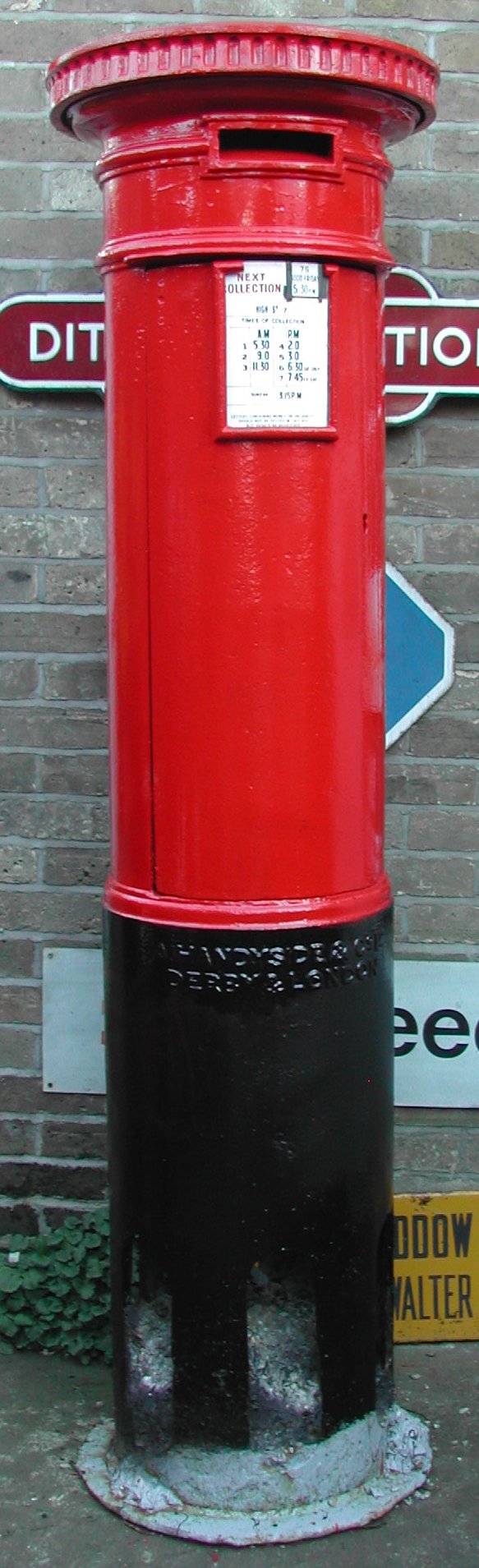
Our latest addition is another Victorian box, although this is not obvious to a casual observer. That is because it has no Royal cipher and does not even say Post Office. This was, of course, a mistake. However it took eight years to rectify it. These boxes were made by Andrew Handyside of Derby in 1879 and are known as "Anonymous" pillar boxes as they carry no name. They are relatively scarce and exist in two types. The early one as you see here is a High Aperture box. That means the letter aperture is set high up just under the cap. Unfortunately this caused the odd letter to get stuck under the rim and caused problems, so the design was modified to place the aperture lower - roughly between the two beaded bands. These later ones are known as Low Aperture.
Ours is the Anonymous High Aperture PB 11/1 . You can see the tremendous depth to which these boxes extend below ground.