Post boxes of George V
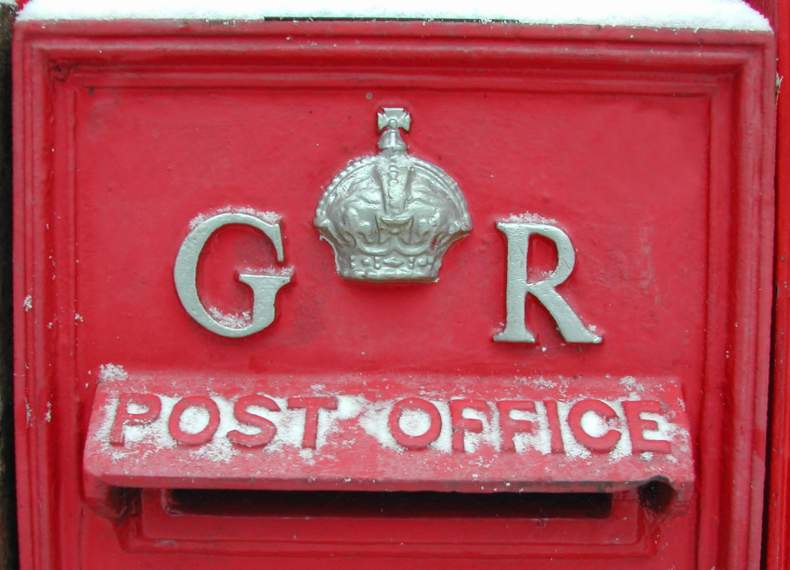
GeorgeV had the second-longest reign of the Twentieth Century and encompassed some fundamental changes to GPO operations: the telephone network spread widely and rapidly and Airmail service began. Thus there are many different varieties of George V boxes, some only distinguishable from each other by careful measurement with a ruler.
Here we present some of the boxes from the George V era in our collection.
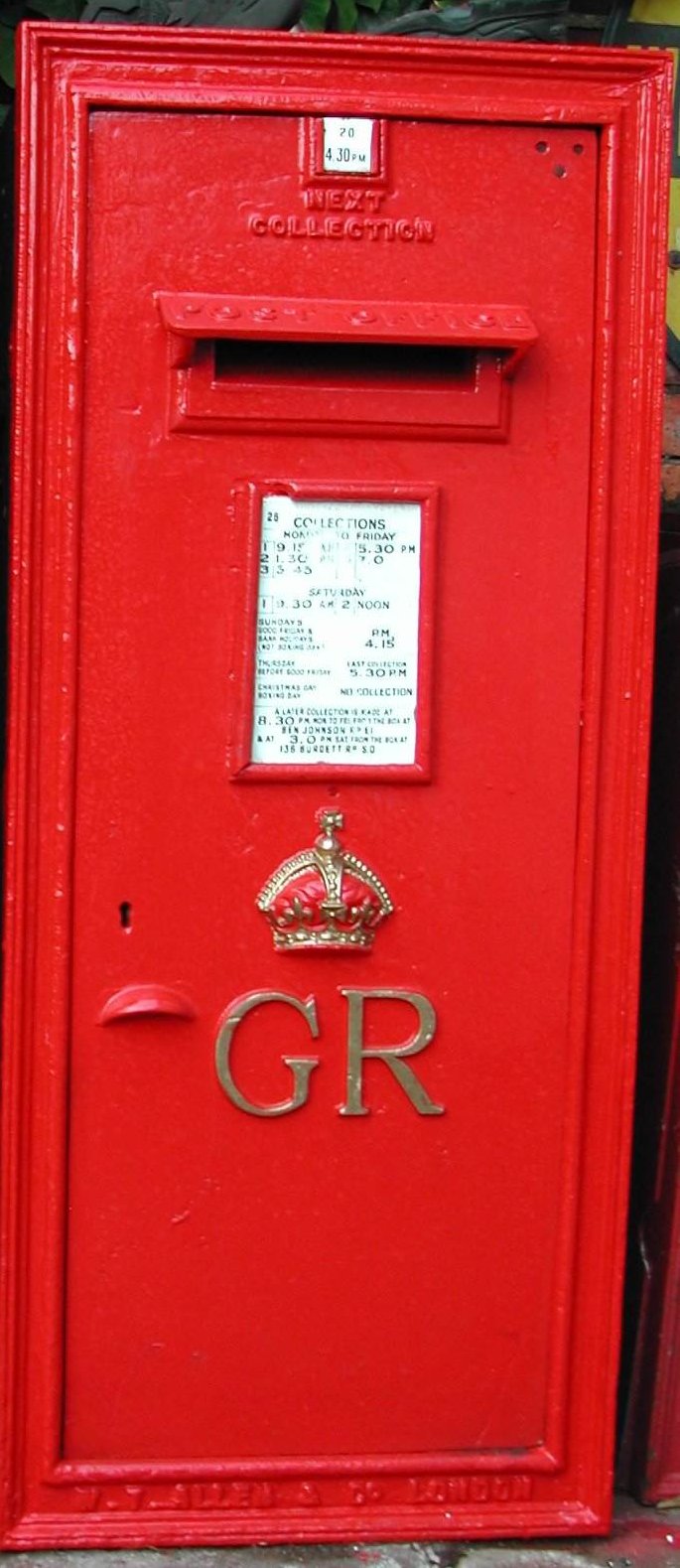
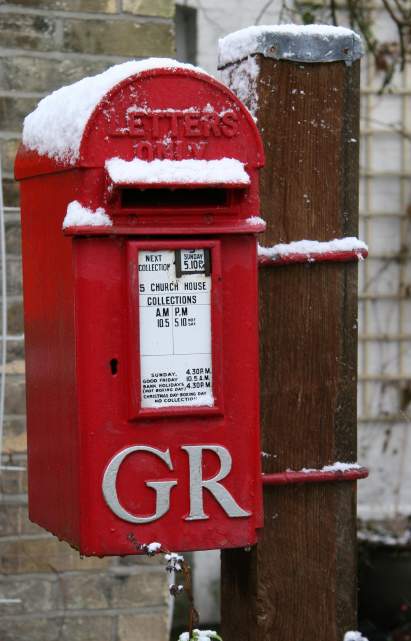
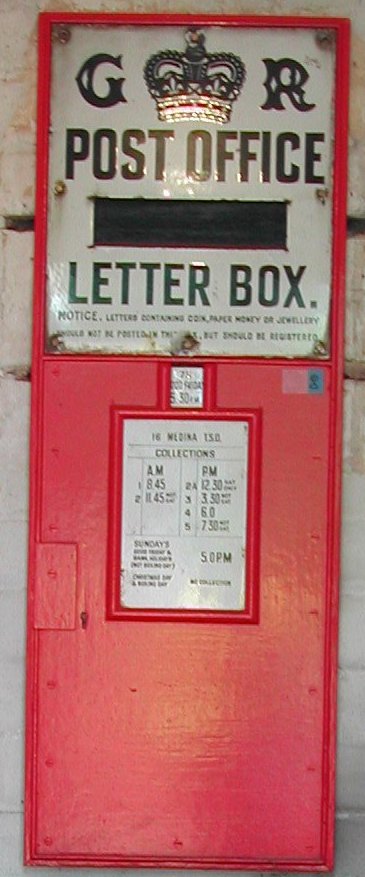
There are a large number of different wall boxes in use from this reign and we are lucky enough to have a good selection of these. Below we illustrate the standard E wall box (with door at back and front) in four different versions:
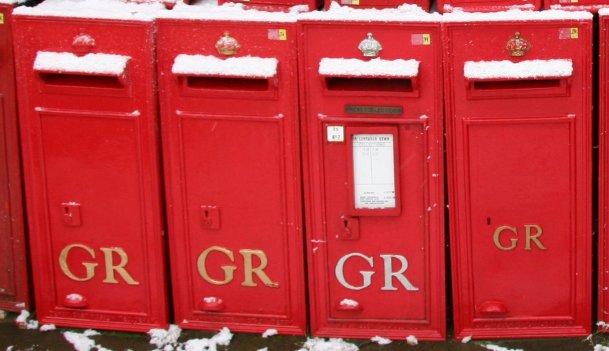
From the left these are:
WB 106/2 Derby Castings 1933
WB 106/1 Andrew Handyside 1932
WB 106/4 W T Allen 1934 - large low cipher
WB 100/1 W T Allen - small high cipher
Click the image to see the different signatures.
Andrww Handyside became Derby Castings for just one year before going into liquidation and eventually becoming part of the Allied Ironfounders group. The single box in this group with a collection plate is an E box modified to look more like a B. The Next Collection casting that would be found on a real B wall box is replaced by a large engraved brass plaque.
Further George V examples
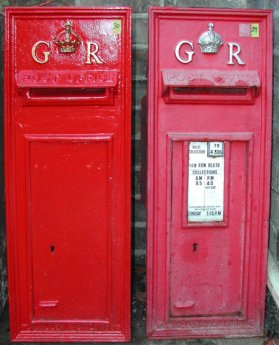
The small C / F wallboxes of George V are also interesting. Our C wall box (WB98/1) came from the widow of a local postman. It had sat in their garden painted white and under a hedge, which turned it green. However, after bead blasting, it came up really well and the previous owner was impressed by it. It is now due for a re-paint.The F wall box (WB101) is from a sub-post office and opens at the rear. Like the D and E boxes, it has no collection plate holder, as the collection times would be displayed in the post office window.
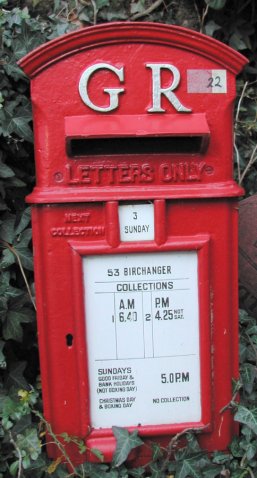
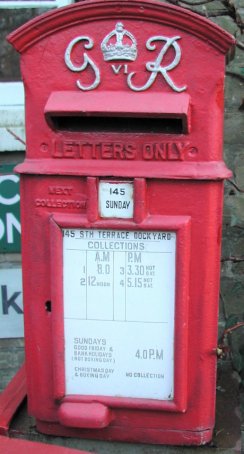
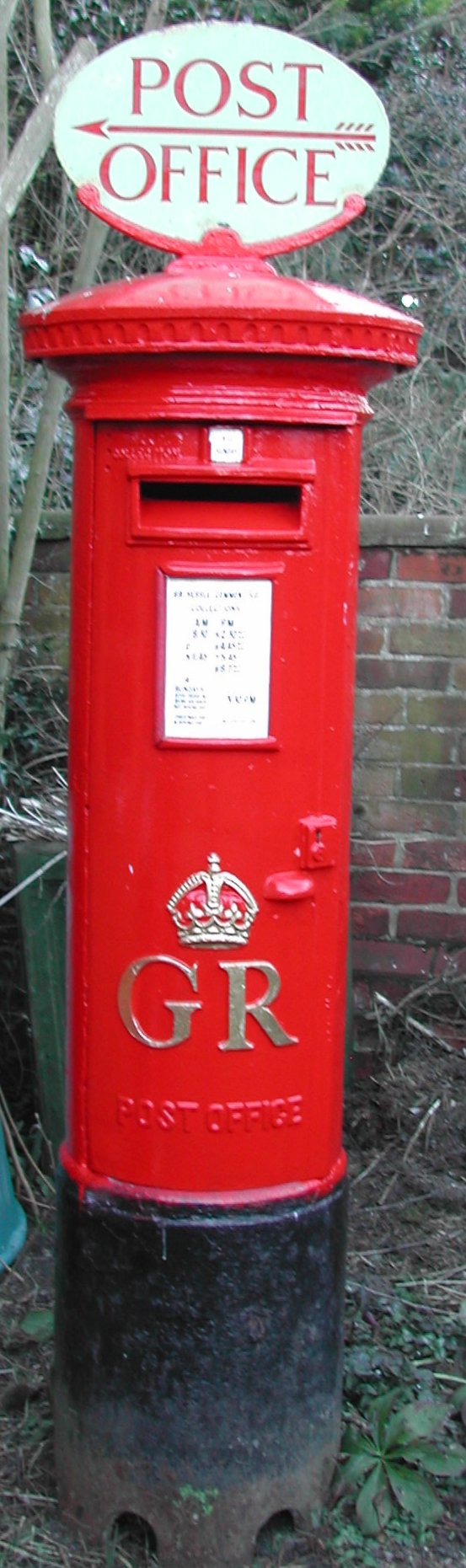
The GR 1935 Pattern Lamp Letter Box (LB211) came right at the end of the reign. It is made entirely of cast iron, the last lamp box design to be so constructed. The eliptical roof of these very attractive boxes gives them the name "Waggon Top" boxes. The design was perpetuated in to the George VI reign (LB212) and here you can see both for comparison.
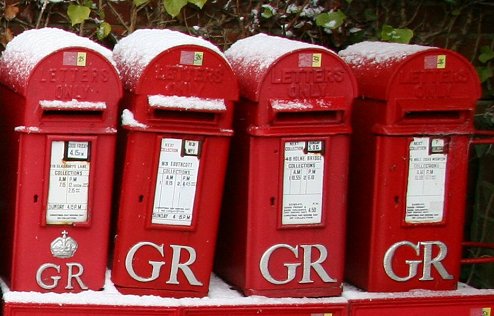
These four boxes are all by different foundries from this long reign. The rounded top leads to this type being know has "Hovis" boxes, after the famous loaves of bread. The boxes in this selection are:
- LB206 A.Handyside with long door & small crown
- LB210 W T Allen - short door
- LB209/2 Derby Castings - short door
- LB207 A.Handyside with no crown & long door
We also have an LB208, W T Allen long door which is shown earlier on this page. The extreme right-hand box is still attached to the "hoops" which secured these boxes to telegraph poles.
Latest additions
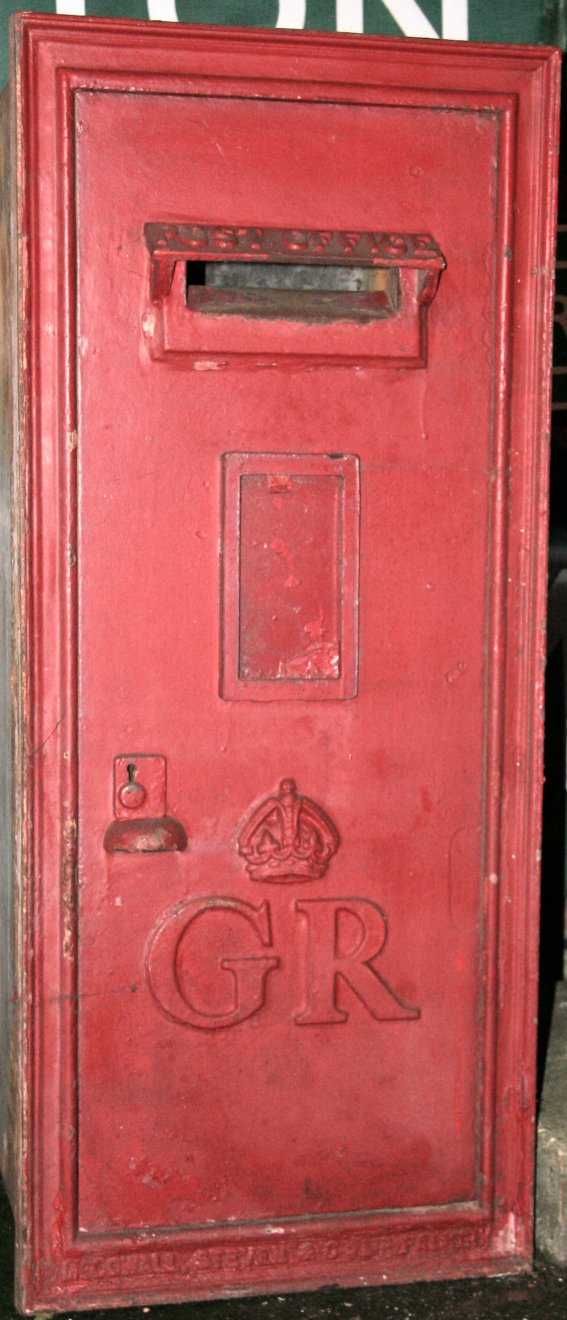
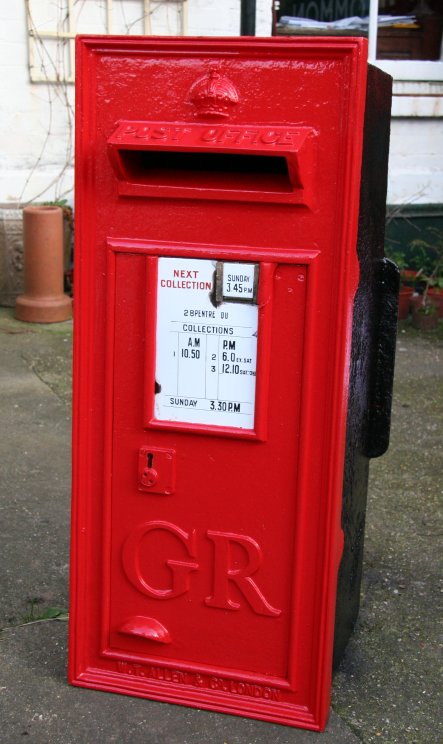
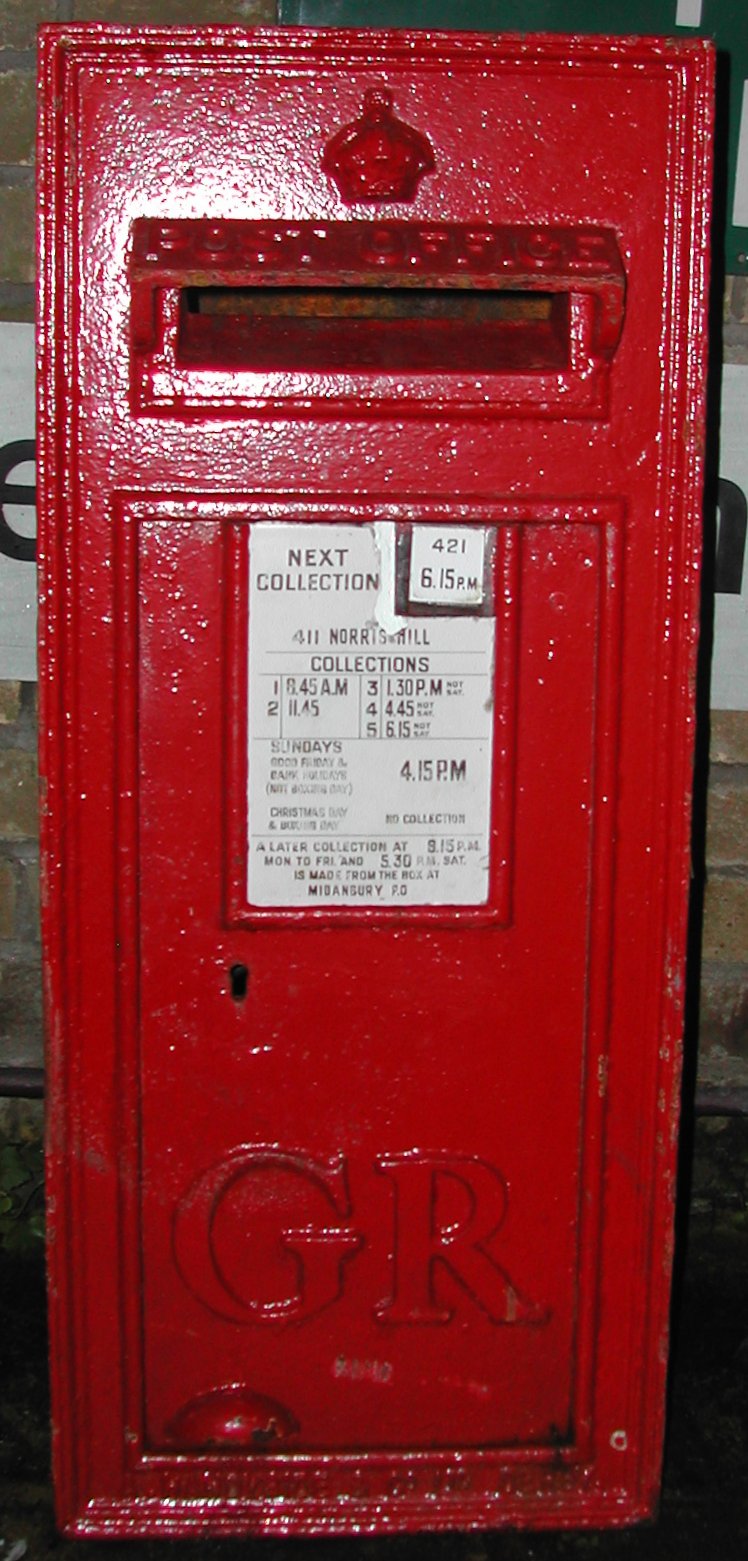
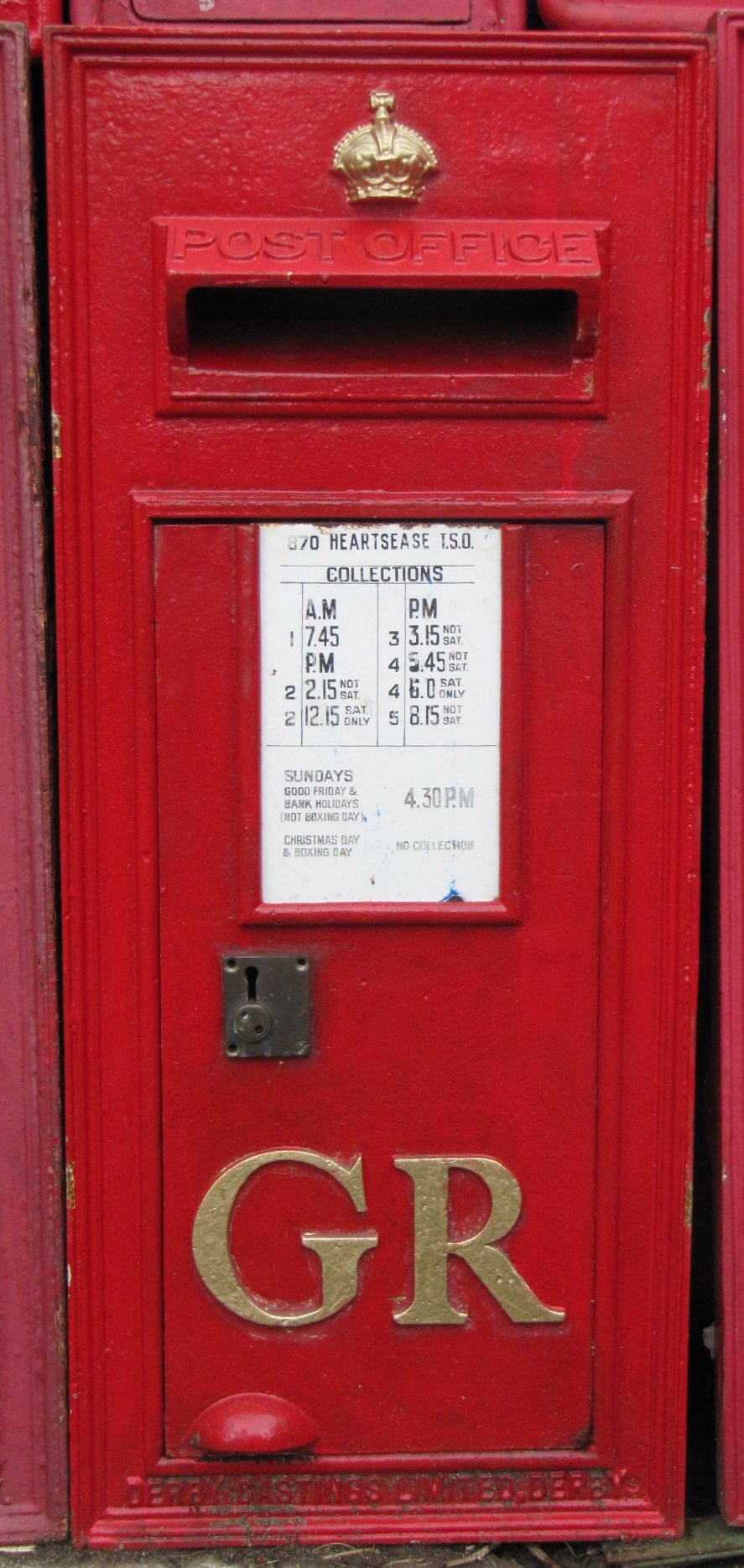
The last of the 1931-35 wall boxes that we needed for our collection was this rare Derby Castings B size wall box. It finally emerged in the Manchester area towards the end of 2011. Derby Castings only made boxes for one year - 1932. The collection plate "Heartsease TSO" is from Norwich. WB103/2
George V Ludlows
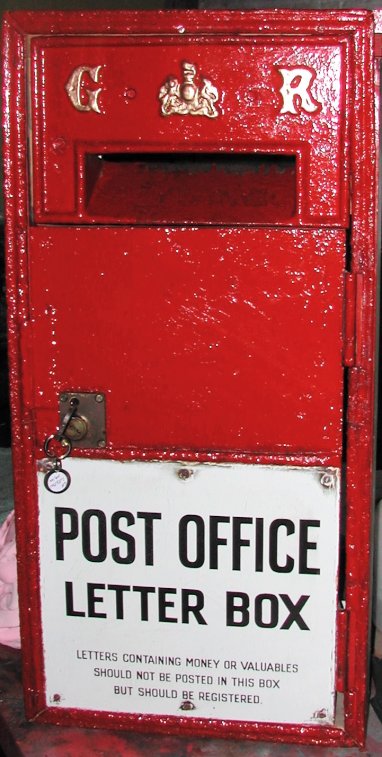
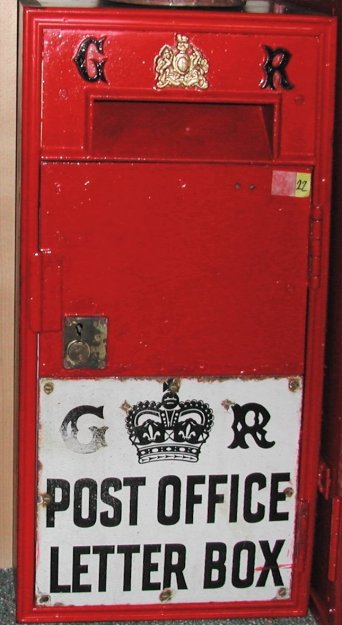
The 1920s and 1930s seem to have been the heyday of the Ludlow, with more of these era surviving than any other. During the reign of George V the basic "small" Ludlow design was modified to increase the capacity. On the right is the standard LWB165 Ludlow. Notice how the crown is touching the top rim of the aperture. This was how it had always been in the VR and EviiR boxes too. In the left-hand picture you can see the bottom of the crown now well clear of the aperture beading; this is the LWB166 and is much rarer on the street. After this point all small Ludlows were made to the revised specification, making it easy to identify the handful of boxes branded ER that were made for Edward VIII from those made for Edward VII. To really see this, you need to take the Ludlow Tour of Britain.
The Large Ludlow is one of the simplest and most attractive designs from the period. The big bold cipher and clear crown stand out at a distance and the large centrally placed aperture will accept most packets.
Now in sad decline as Royal Mail closes many rural sub-offices, the long Ludlow could also be extended down inside the shop below the level of the door if extra capacity were needed. These well boxes cannot be told apart from a regular box from the outside..