Elizabethan post boxes
The longest reign of the twentieth century produced a very large number of post box installations and novel designs. Ideas came and went through the 1960s, 1970s and 1980s. The Museum holds examples of many of these and is particularly strong in Elizabethan lamp letter boxes. Although the basic lamp-box design was established under George VI, the type underwent many interesting changes afterwards, and the collection allows those changes to be traced in order. We also cover the development of the modern posting box through the 1990s and into the early twenty-first century, up to the end of the reign in 2022. Our wall box collection shows how this classic design was refined to accept larger envelopes and more mail.
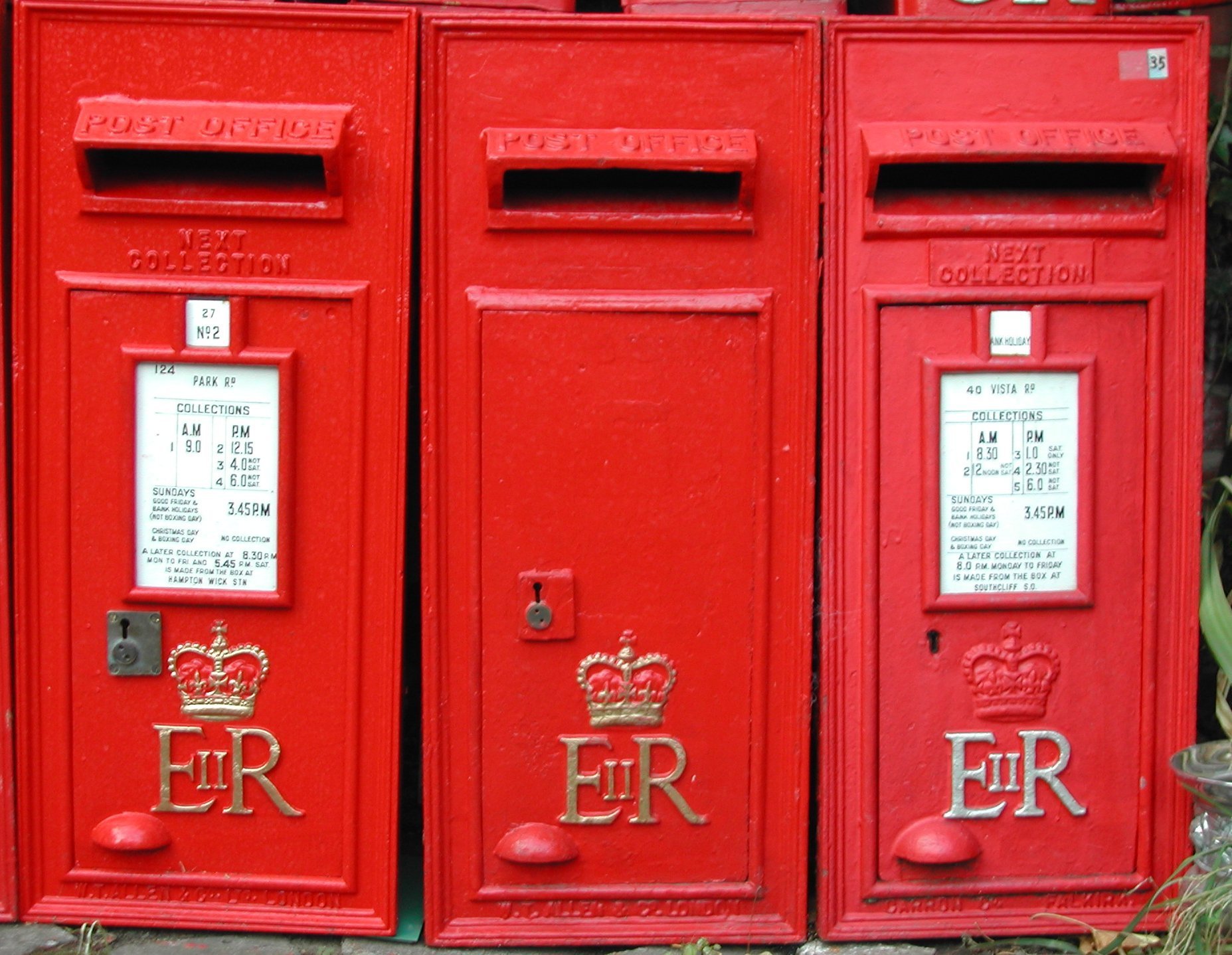
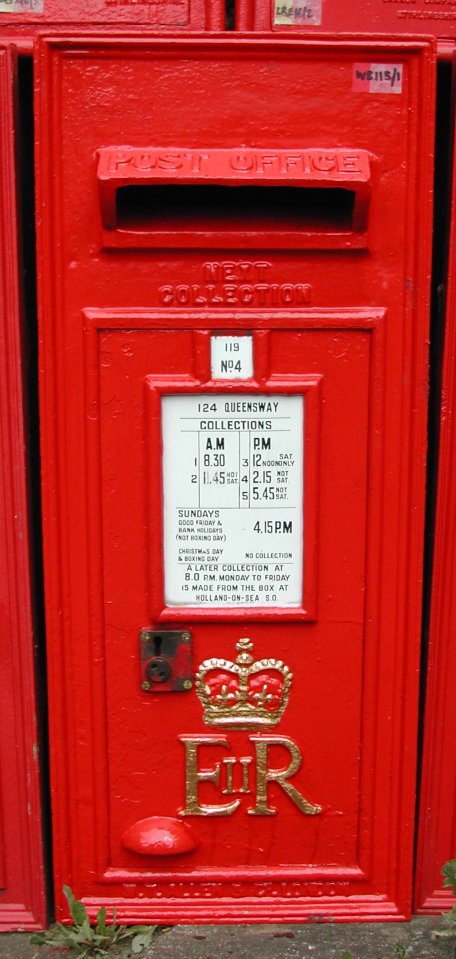
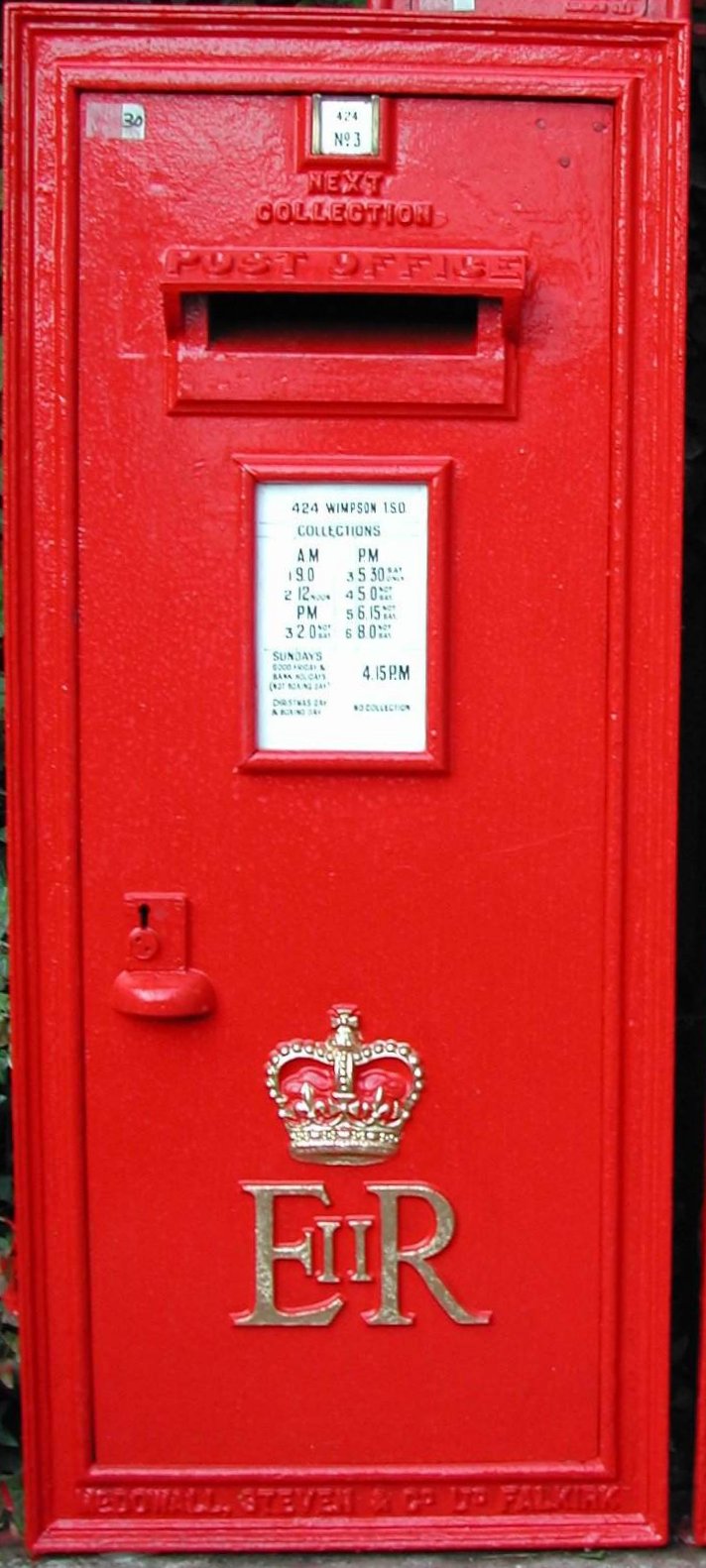
Here you can see the three principal types of EiiR wall box. From the left these are the early 8" aperture boxes, with and without collection plate holders, and to the right the later Carron box with 10" aperture. The early boxes are by WT Allen. (WB115/3, 116/3 & 119/1) The wallboxes without collection plate holders are generally those which open from the rear as well as the front. These were a common feature of sub-post offices and were given their own classification; instead of A, B and C size they were respectively D, E and F size. Next to these you can see our A size wall box. These are large enough to put a six year old child in as I found out one day when my youngest climbed in! They were designed for use in cities with large volumes of mail. However the earlier ones such as this have only 8" apertures and have been progressively withdrawn in recent years. Our example is one of two taken out of service in 1999 at Northampton (WB113).
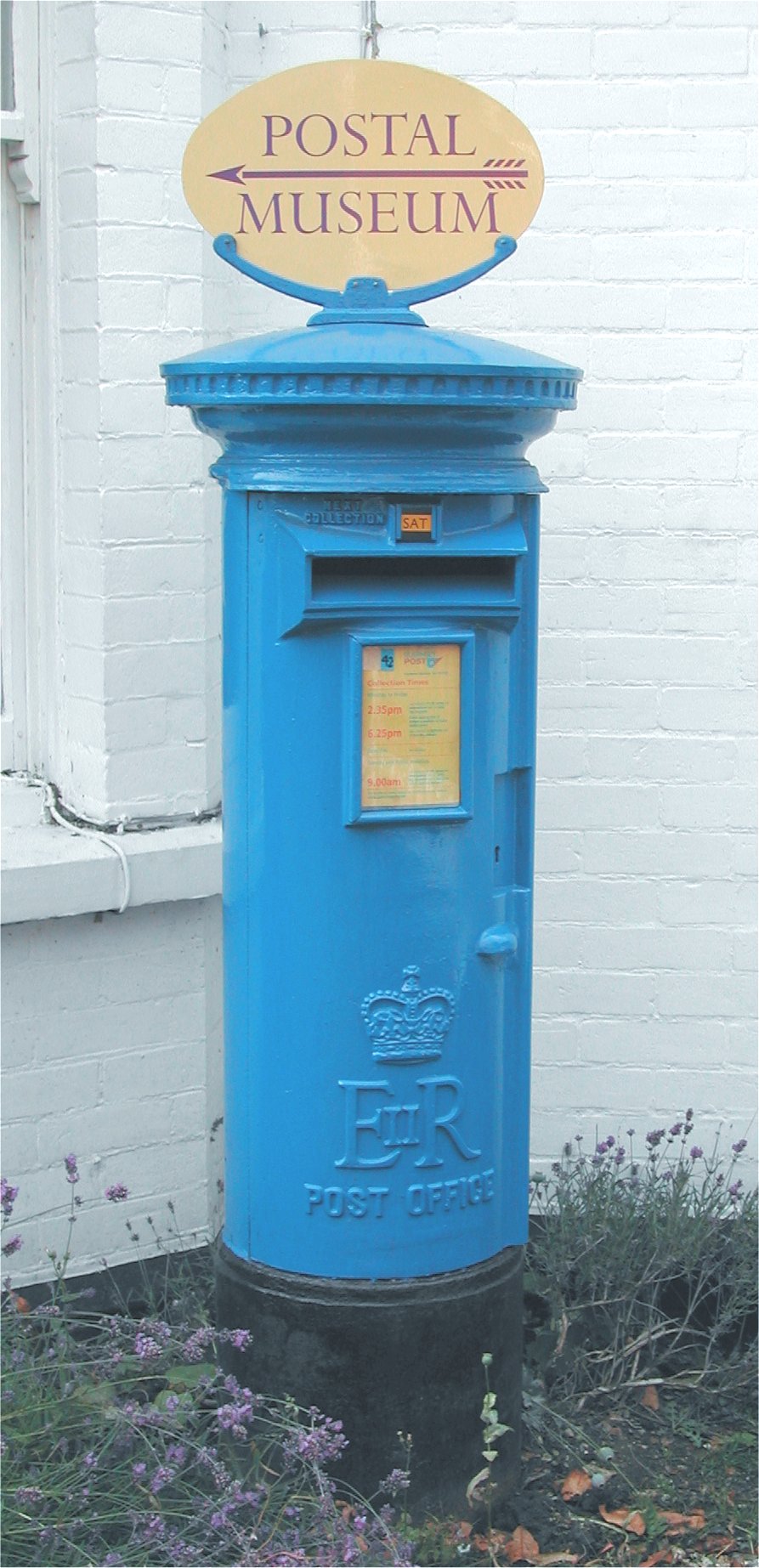
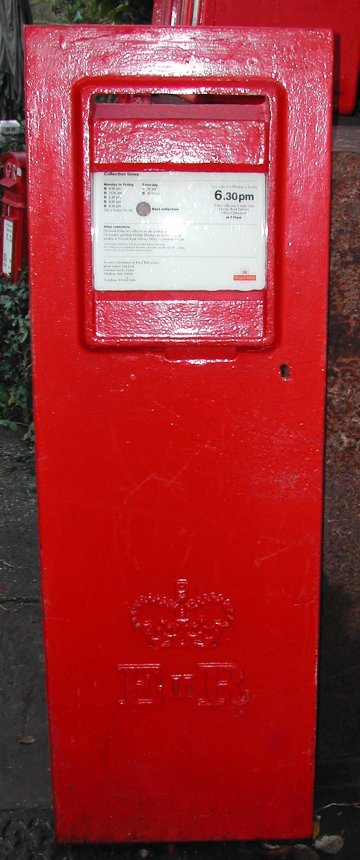
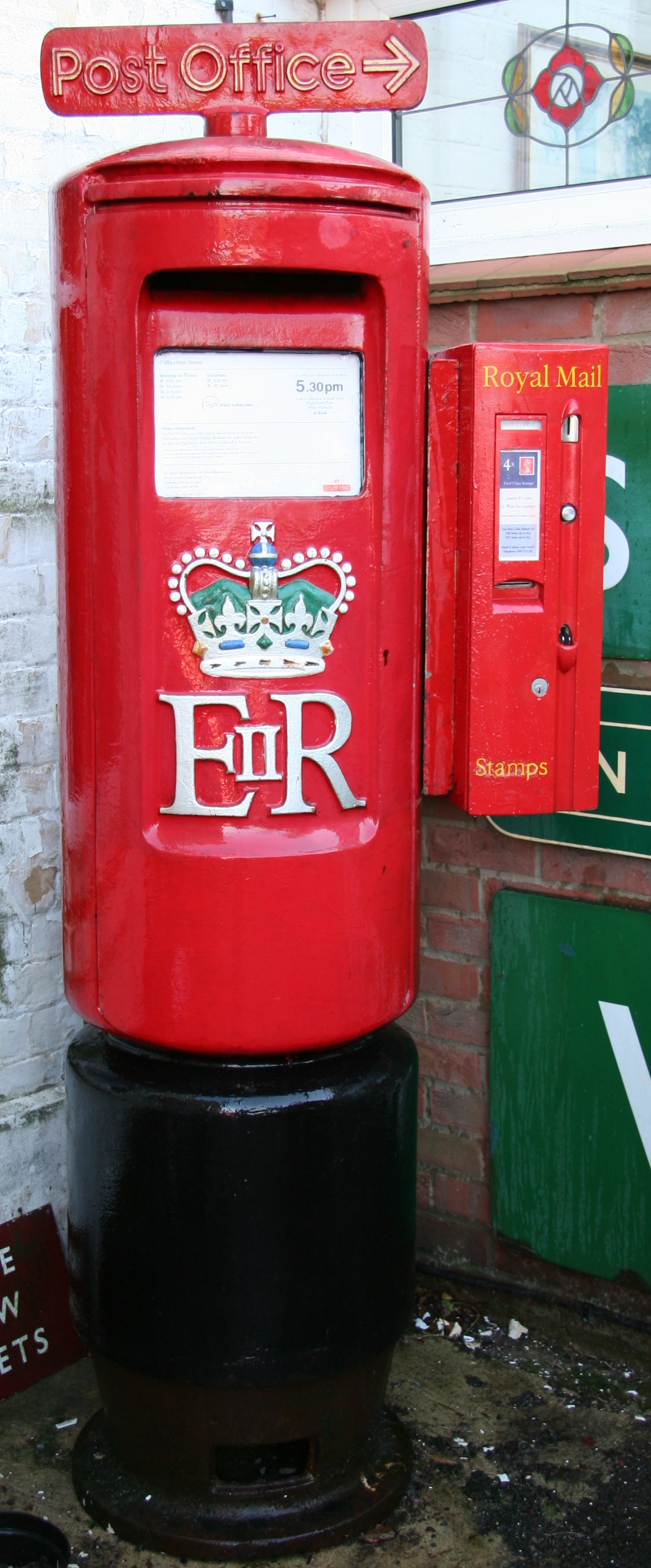
The Elizabethan era has been a fascinating one for design changes in the free standing boxes and we present a selection here. First up, and in the blue livery of Guernsey Post, is the later Carron pillar (PB42) with large jutting aperture and recessed lock. Next to it is the door only from the rectangular Type G pillar by Carron dating from 1976. We also have the internal mechanism for this box and hope to acquire a carcass for these (PB45). To the right of the type G is one of the most interesting boxes from a design point of view, the Gibbs' K Type of 1980 (PB48). The rather squalid looking box on the right is a Jana Industries pedestal box. These were a short-term conversion from that company's pouch boxes to provide a cheap medium capacity box during the mid-1980s (PB51/3). The construction is in self-coloured ABS plastic which has faded badly over the years. There are just a handful of these left on the street. Finally in this selection we have the super Type M Pedestal by Machan. Introduced in 1995 these use a mixture of cast iron and steel fabrications to produce a very attractive box (PB57).
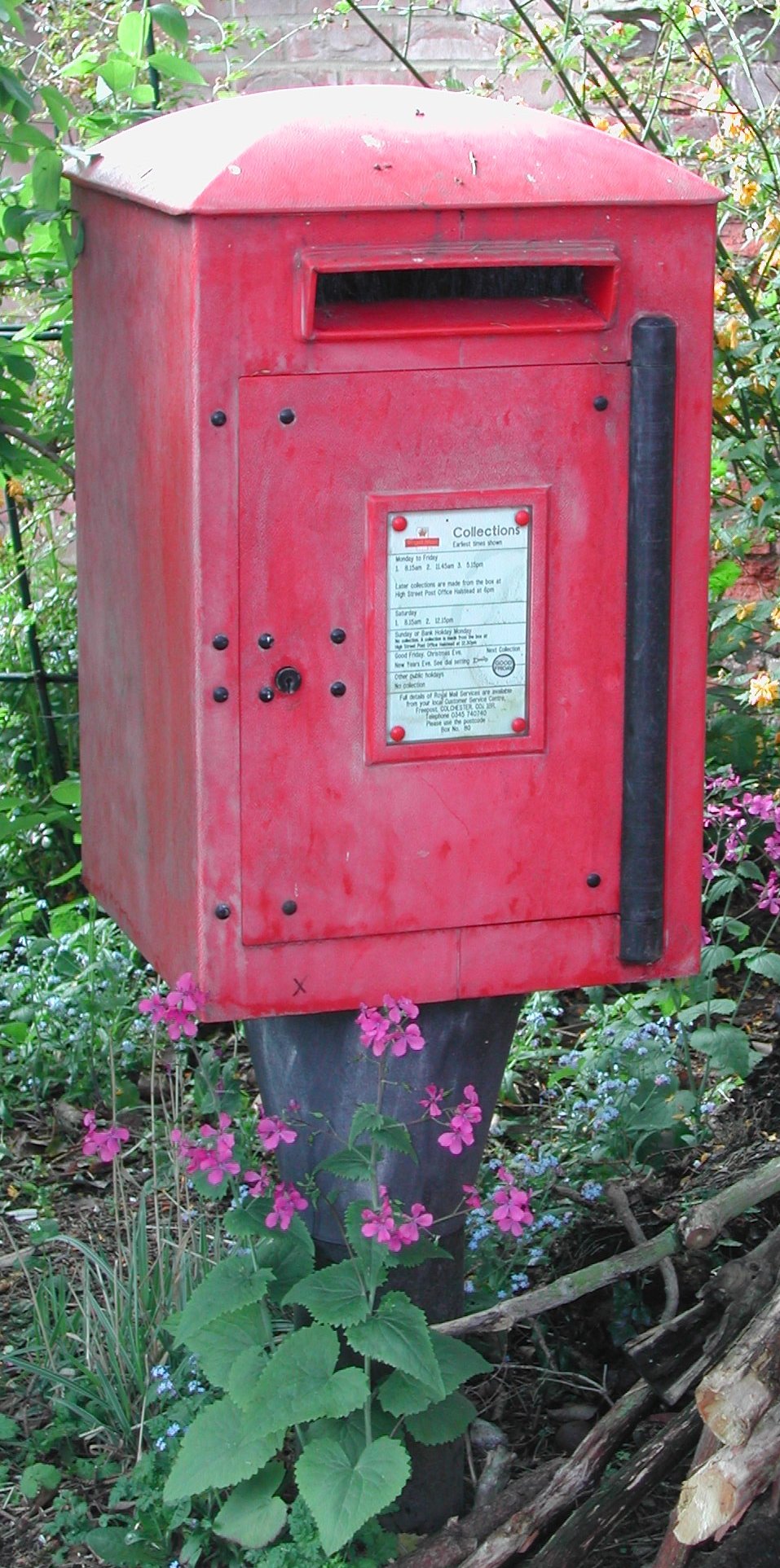
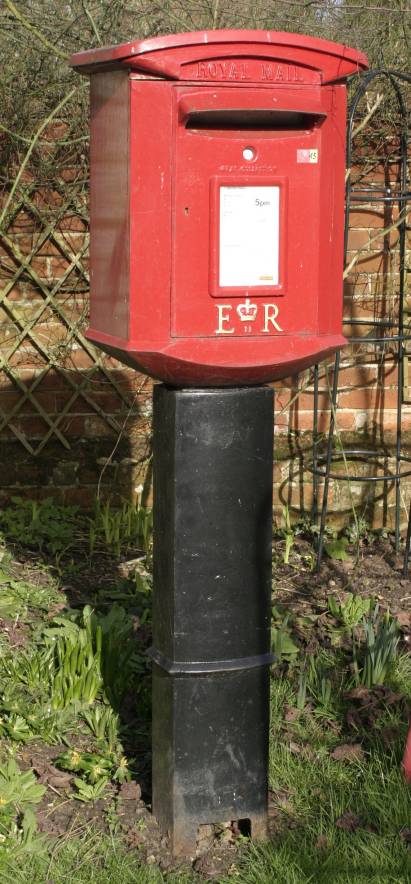
Lamp boxes and related types
Our specialised collection of Lamp letter boxes of the Elizabethan era now runs to 12 examples illustrating the major design changes since 1952. The earliest EiiR lamp box perpetuated the so-called 1940 Pattern introduced in the reign of George VI and is by W.T.Allen, (LB214).
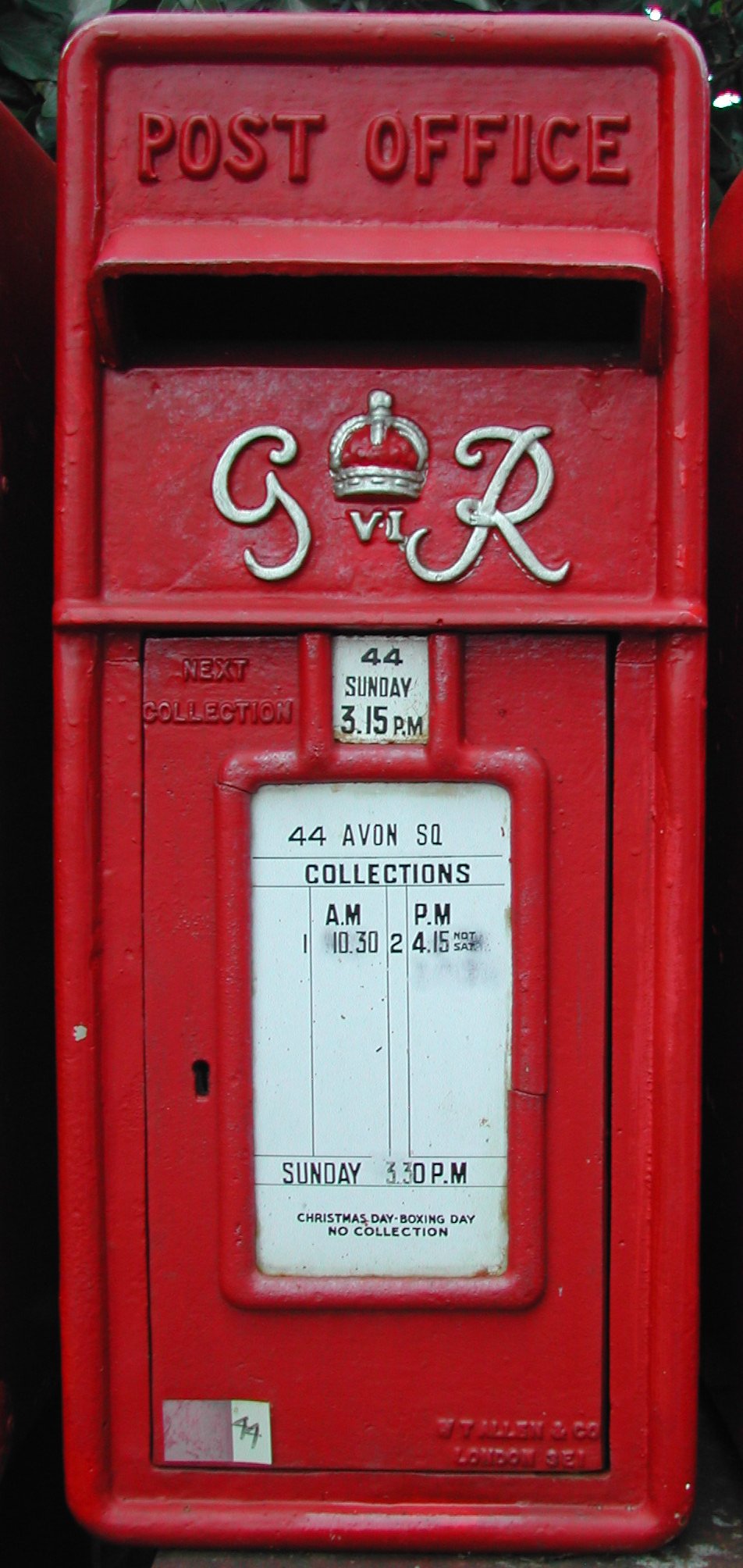
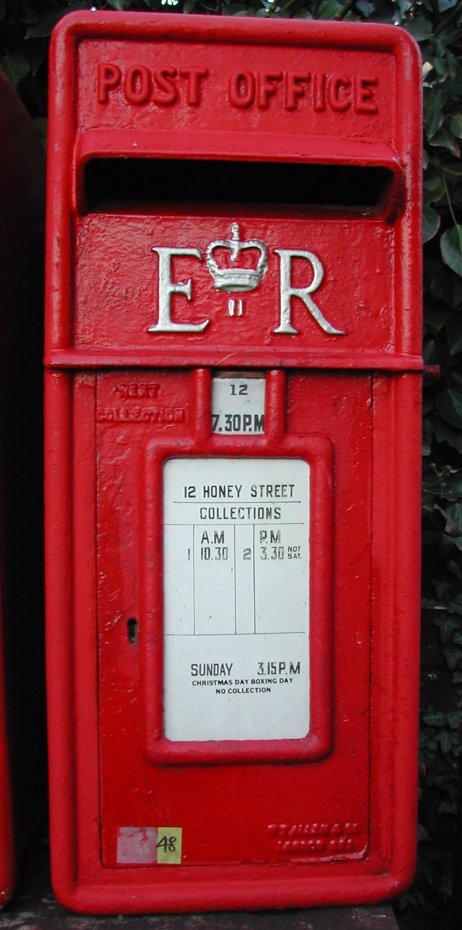
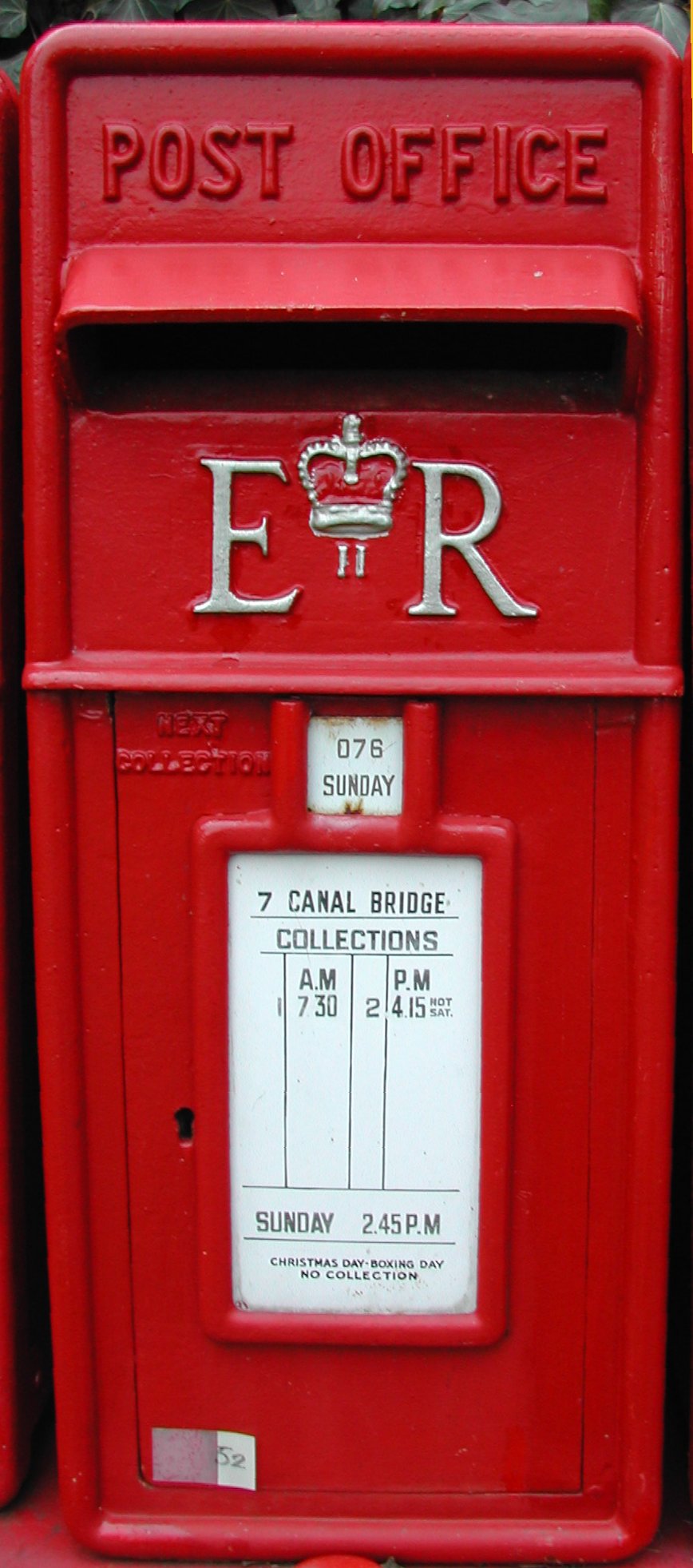
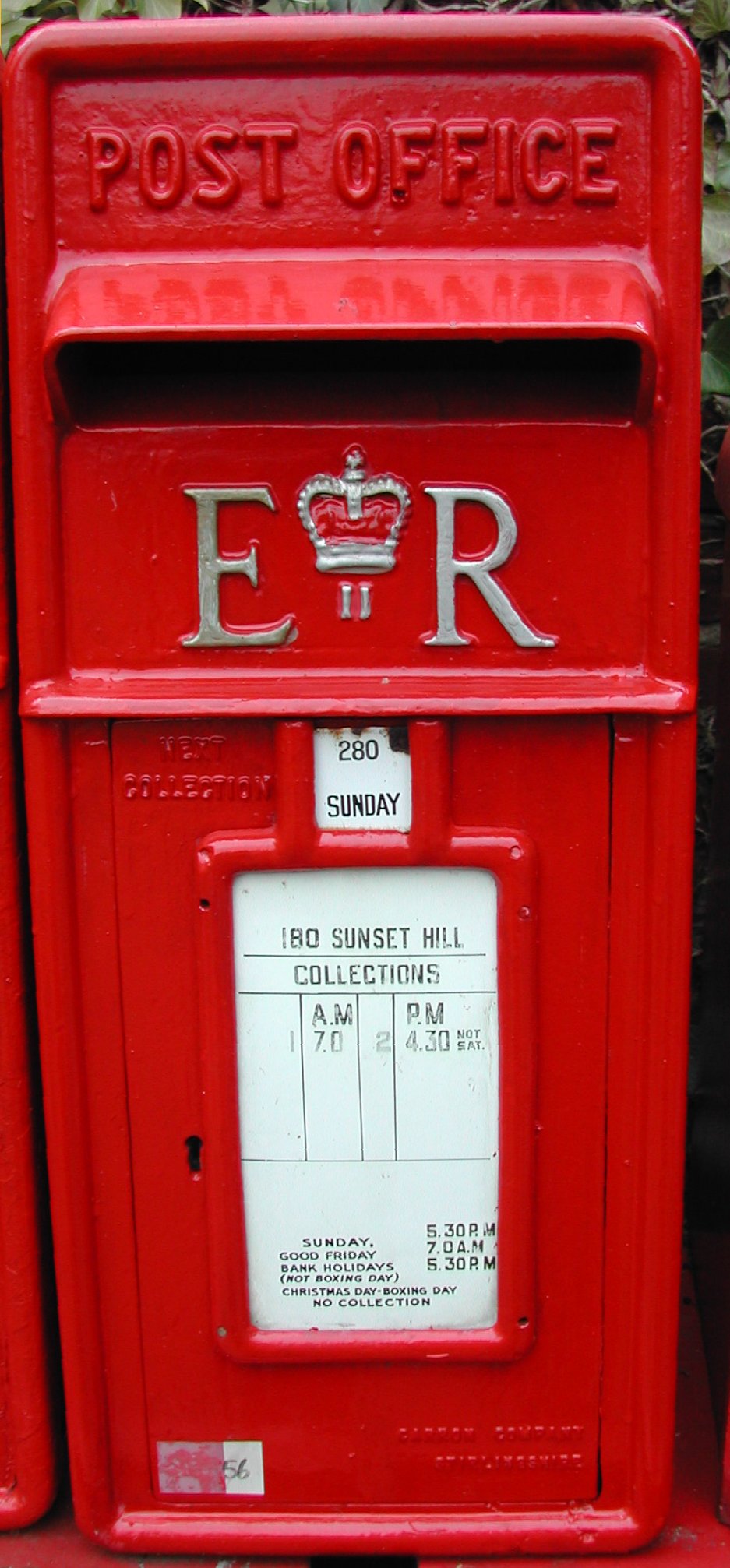
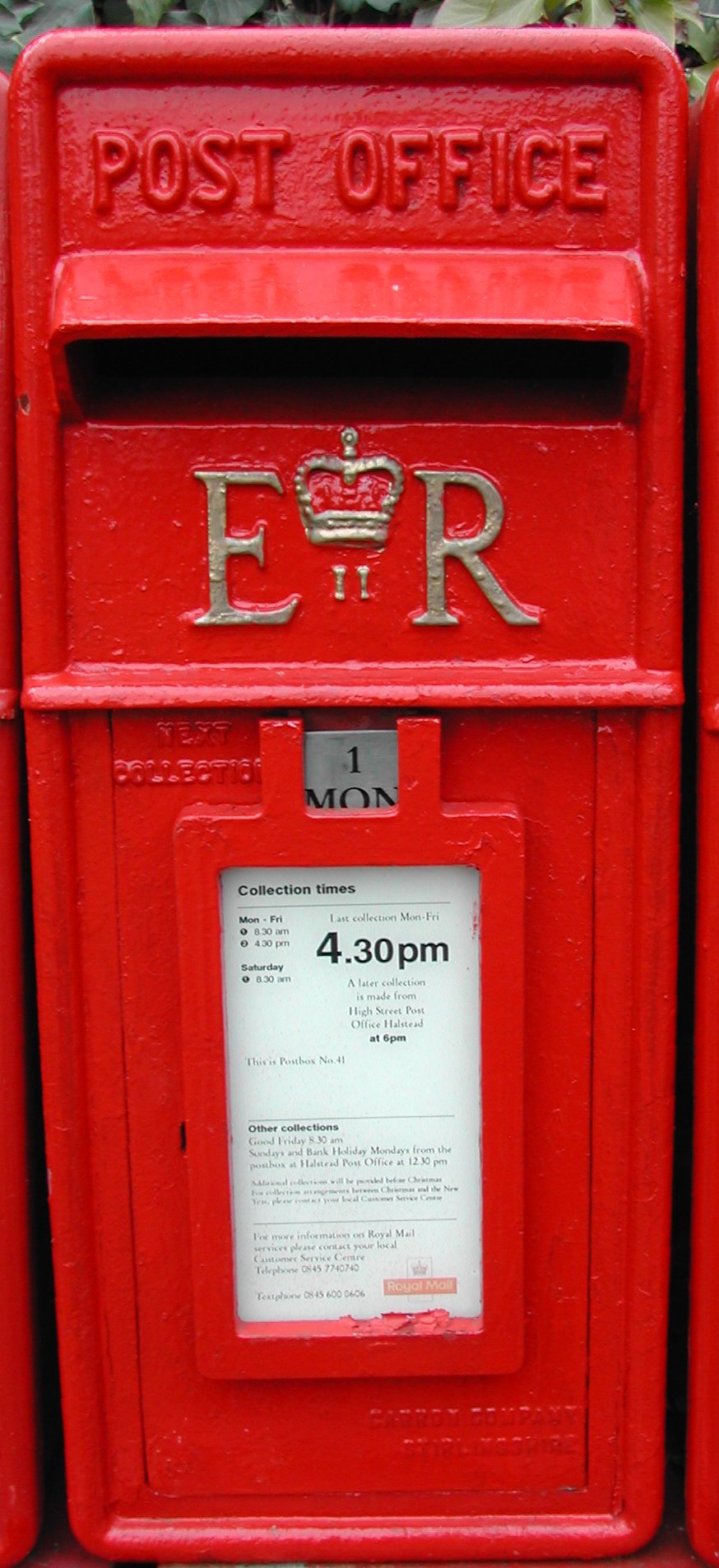
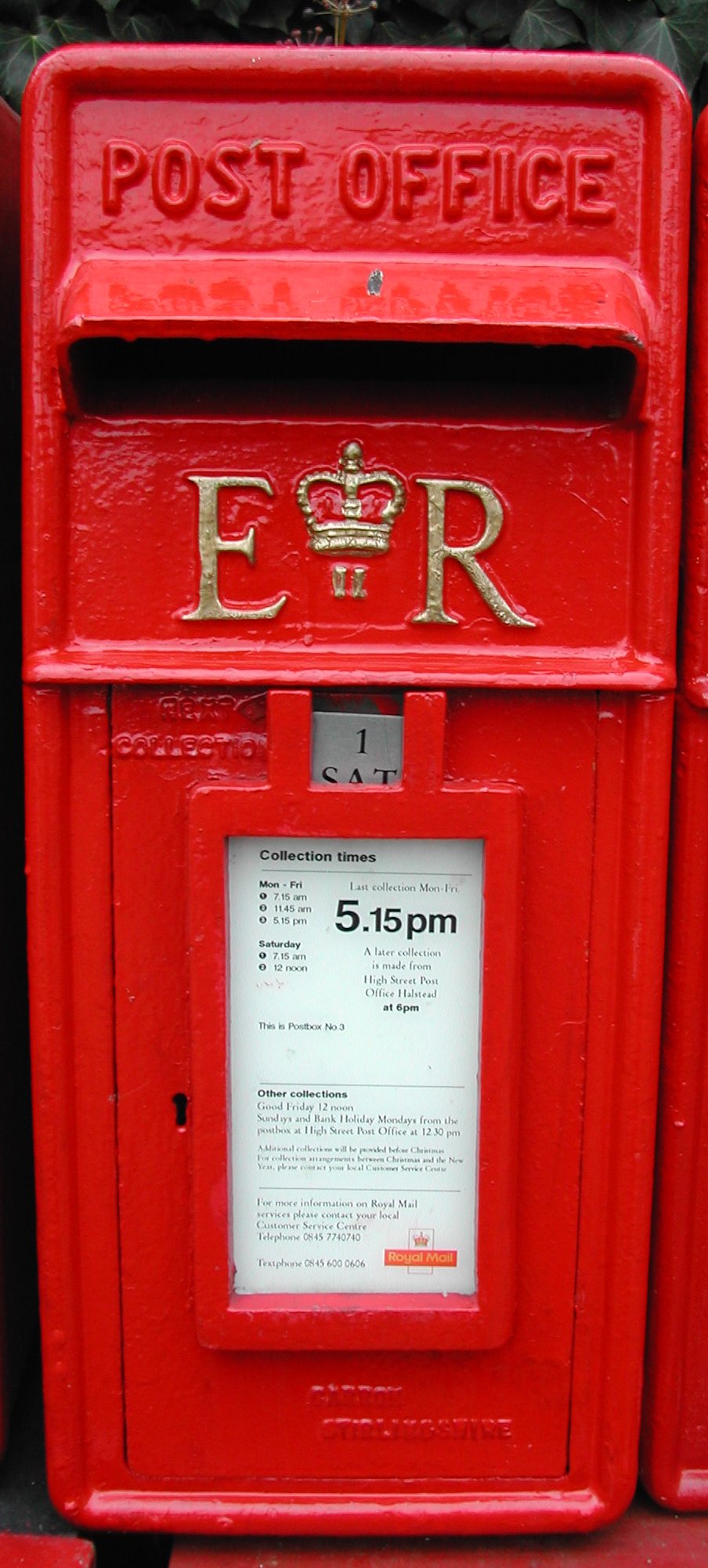
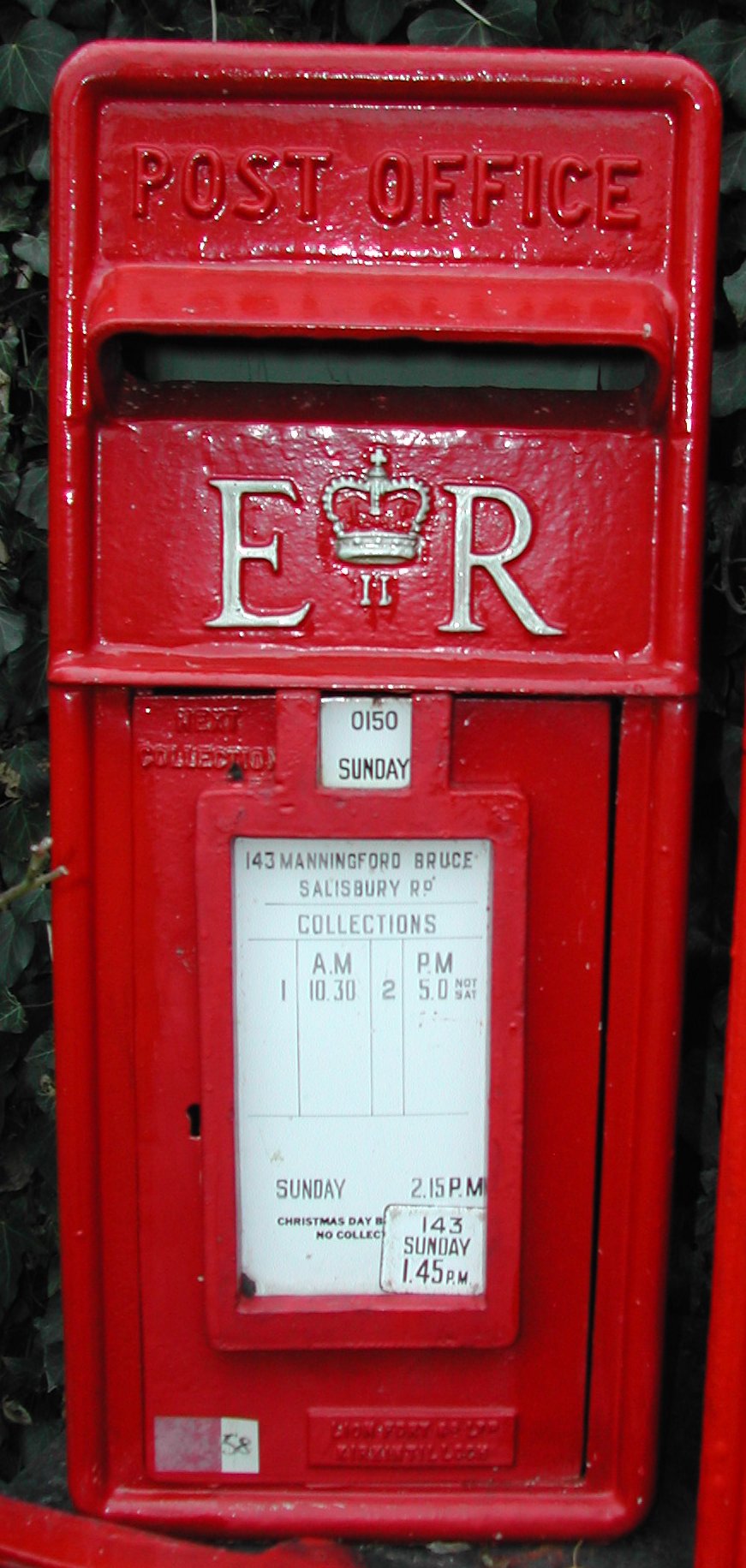
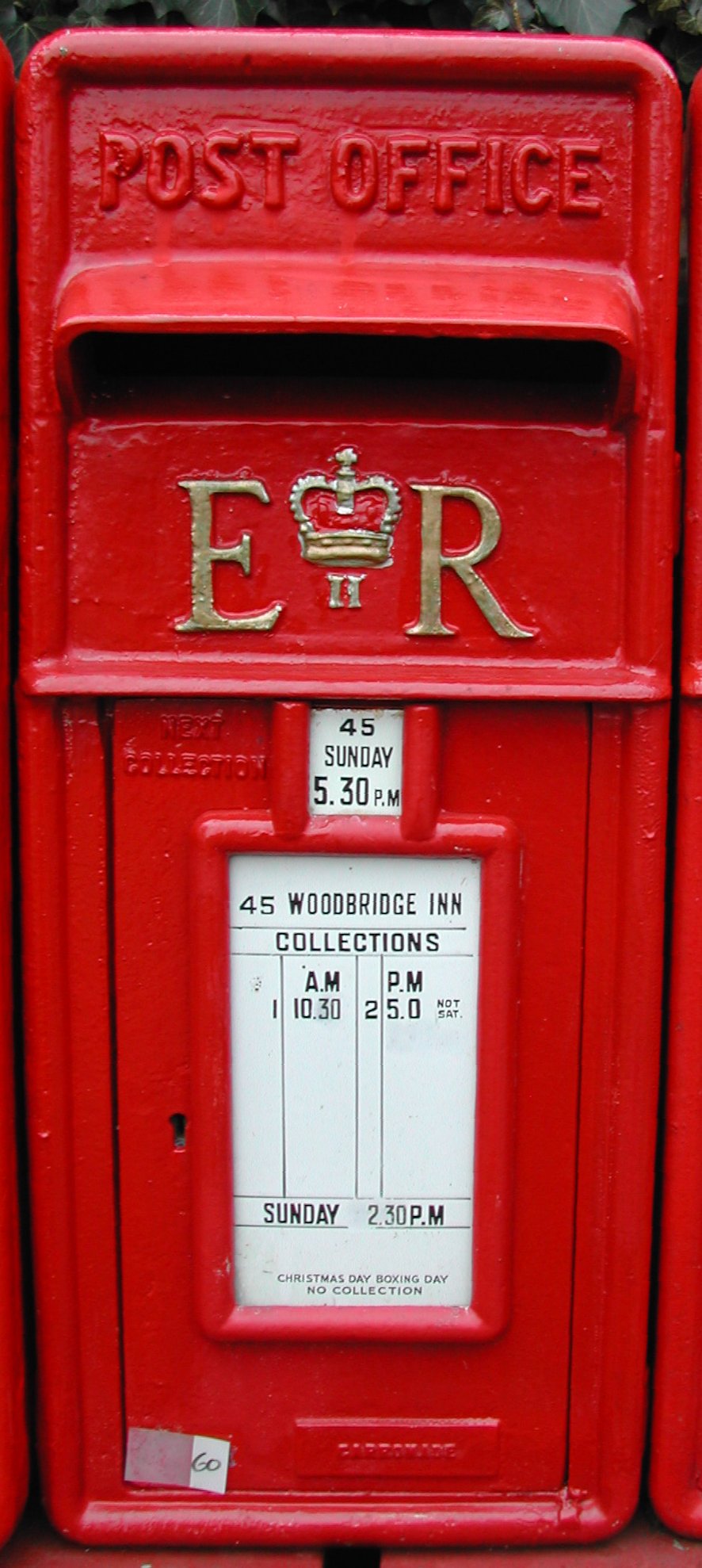
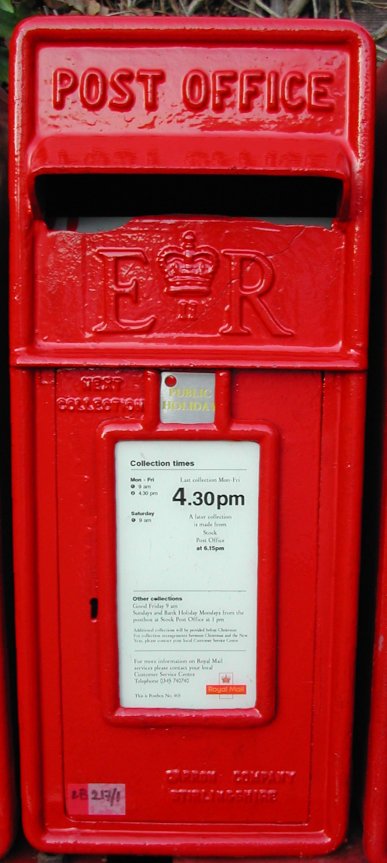
However, the contractsoon passed to a number of different foundries:
- LB215/2 Allied Iron Founders
- LB216/2 Carron Company
- LB216/3 Carron Company Stirlingshire
- LB217/1 Carron Company Stirlingshire 1977 pattern
In 1977, the design was changed so that the cast front was fitted to the galvanised steel back by four rivetted lugs rather than 6 internal screws. These are henceforward known as "1977 Pattern". For the first three years the round profile Cp was retained. However, from 1980, they were always supplied with a Universal Collection Plate Holder (UCPH).
- LB 218/2 Carron Stirlingshire (No "Company") and fitted with Universal Collection Plate Holder (UCPH)
- LB219/2 Lion Foundry Kirkintilloch
- LB220 Carronade
- LB221/2 Machan Scotland
- LB222/2 Abbott Engineering
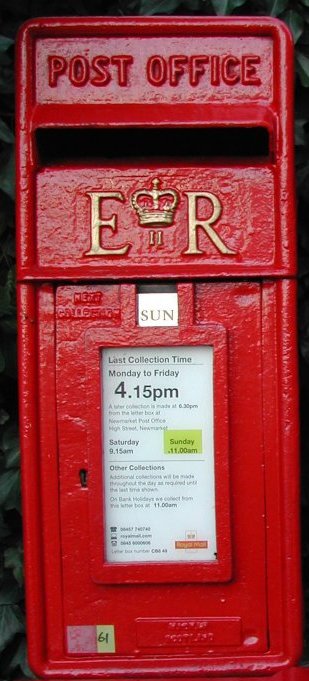
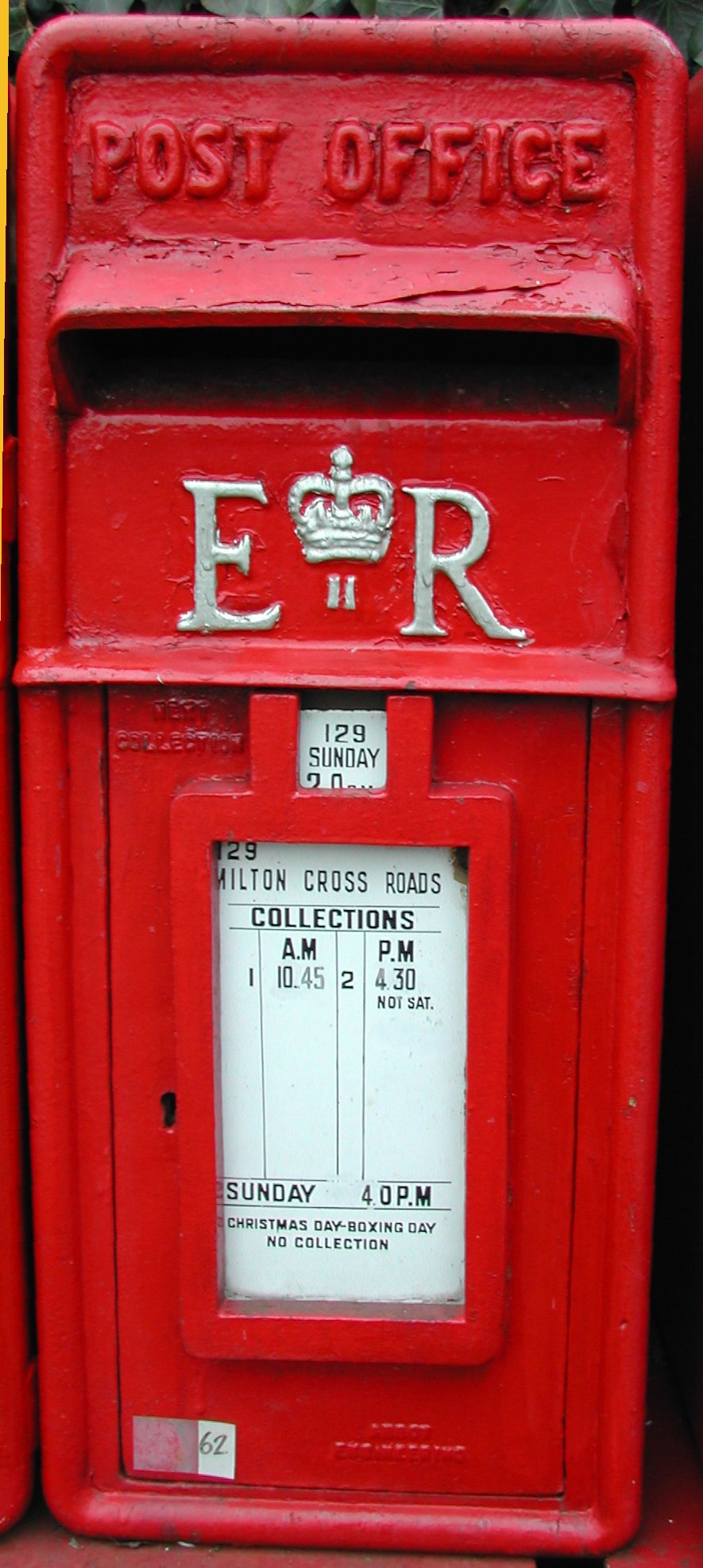
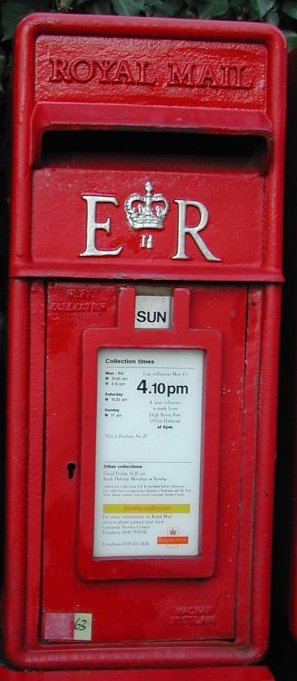
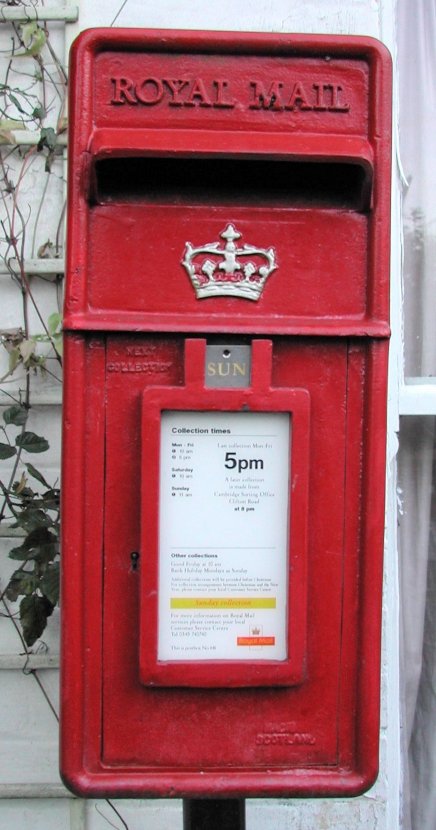
In 1994, the letters business of the Post Office was split from the retail business. The former retained the title Royal Mail Letters whilst the later became Post Office Counters Ltd. This necessitated changing the castings yet again so that in future they would read Royal Mail rather than Post Office
- LB223/4 Machan Scotland
- LB223/4S Machan Scotland with Scottish crown
I hope that gives you a flavour of some of the changes that have ocurred with these boxes over the years.
Further examples
Finally to wrap up this section, a couple of special function boxes and a pair of old favorites. The most recent development in the form of a Garage Box and an older design from the 1970s for a First Day Cover Posting box are joined here by our Elizabeth IILudlows.
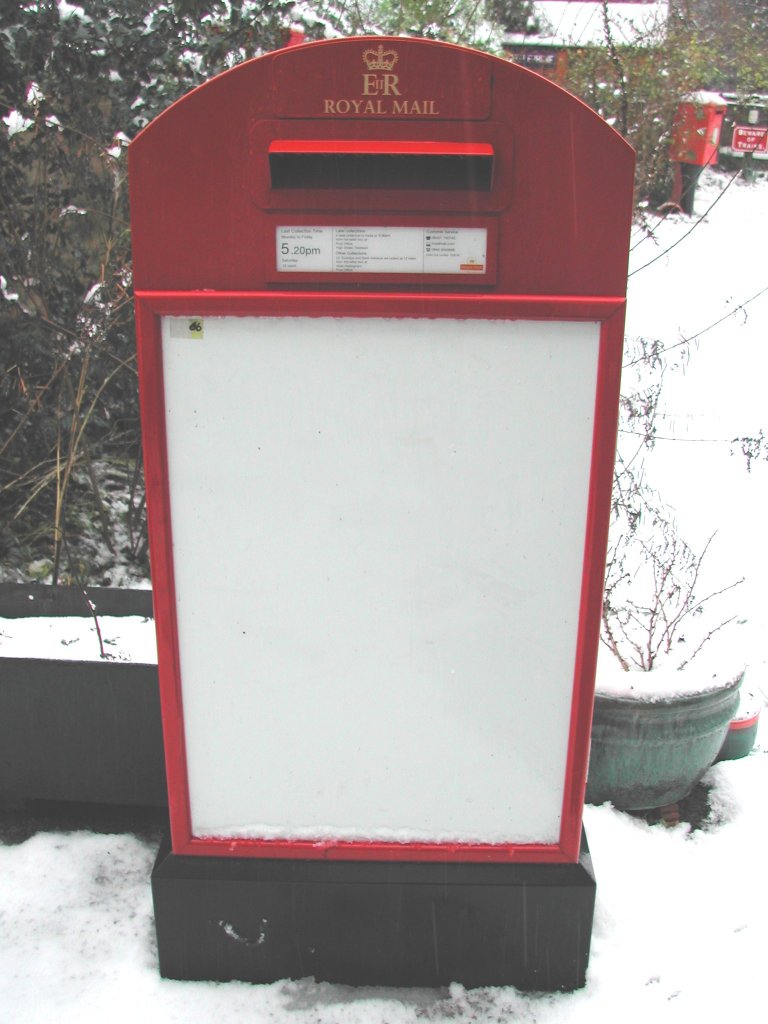
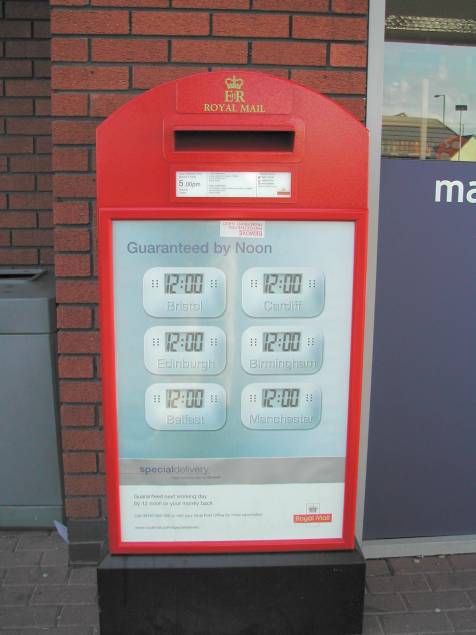
The RoMEC (Royal Mail Engineering Contracts) Garage Box (PB60) was introduced in 2002. Designed to sit on the forecourt of a filling station, they replaced nasty plastic boxes which were given permission to tout for business by Royal Mail some years earlier. Both types were supposed to carry advertising panels on the front. The commercial operation was a disaster and it would appear that Royal Mail did not have much luck either as most boxes seem to have only the Guaranteed Next Day service advertising. Indeed the example at the Walsgrave BP garage in Coventry (above right)has now had the advertising door removed to reveal the inner security door. Construction is galvanised sheet steel throughout.
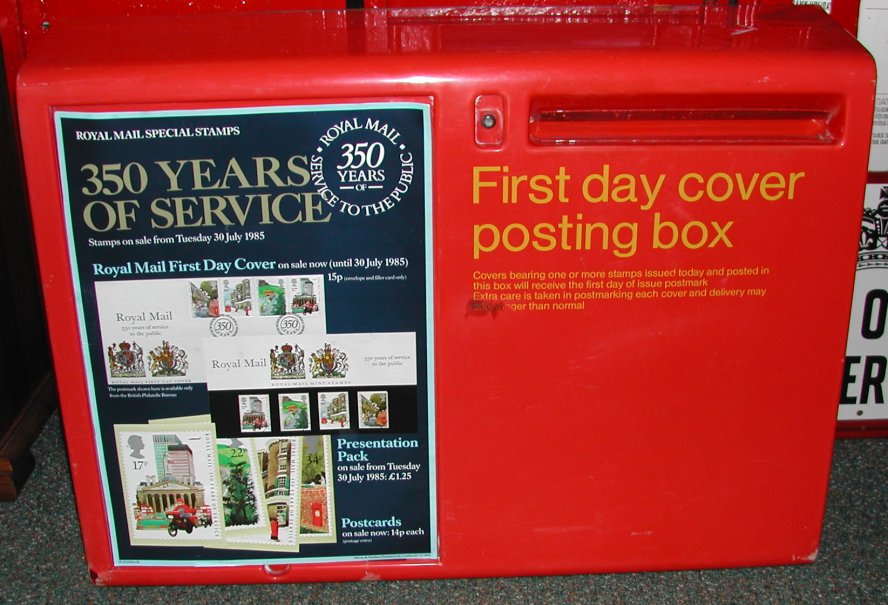
Another box with a featured space for advertising is this 1970s First Day Cover posting box. The advertising panel in this case is only A3 size and designed specifically for promoting the latest Special Stamp issue. Appropriately enough our poster is in celebration of the 350th Anniversary of the General Letter Office. The box is made of plastic with a sheet steel back is designed to be wall mounted inside a main post office where First Day of Issue posting facilities were provided. It is of very cheap and simple construction, with no security features. It merely ensured that items which should receive the special FDI handstamp were kept separate from general mails. When no FDI service is appropriate, an internal shutter is used to close off the posting aperture. NSB351
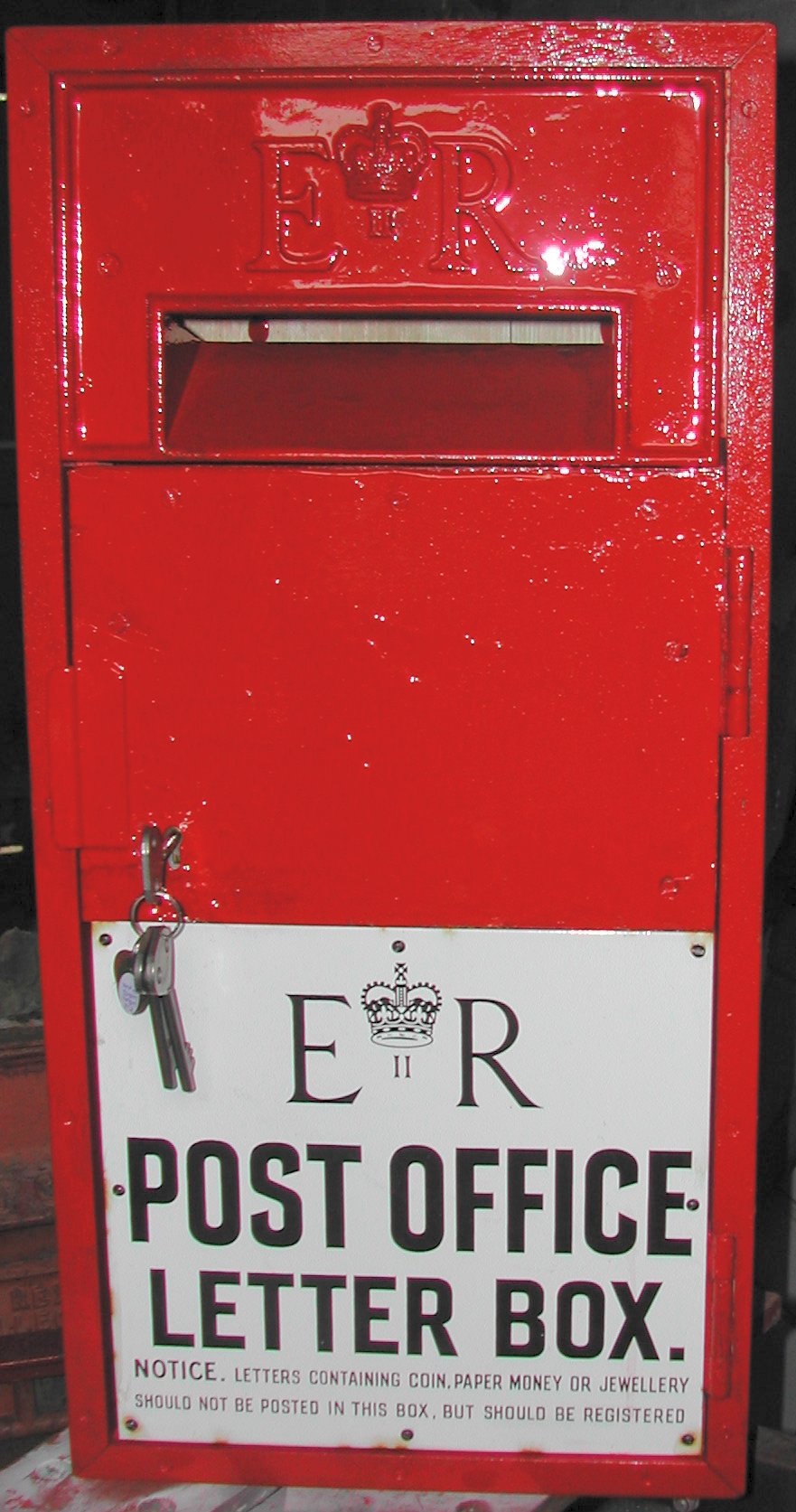
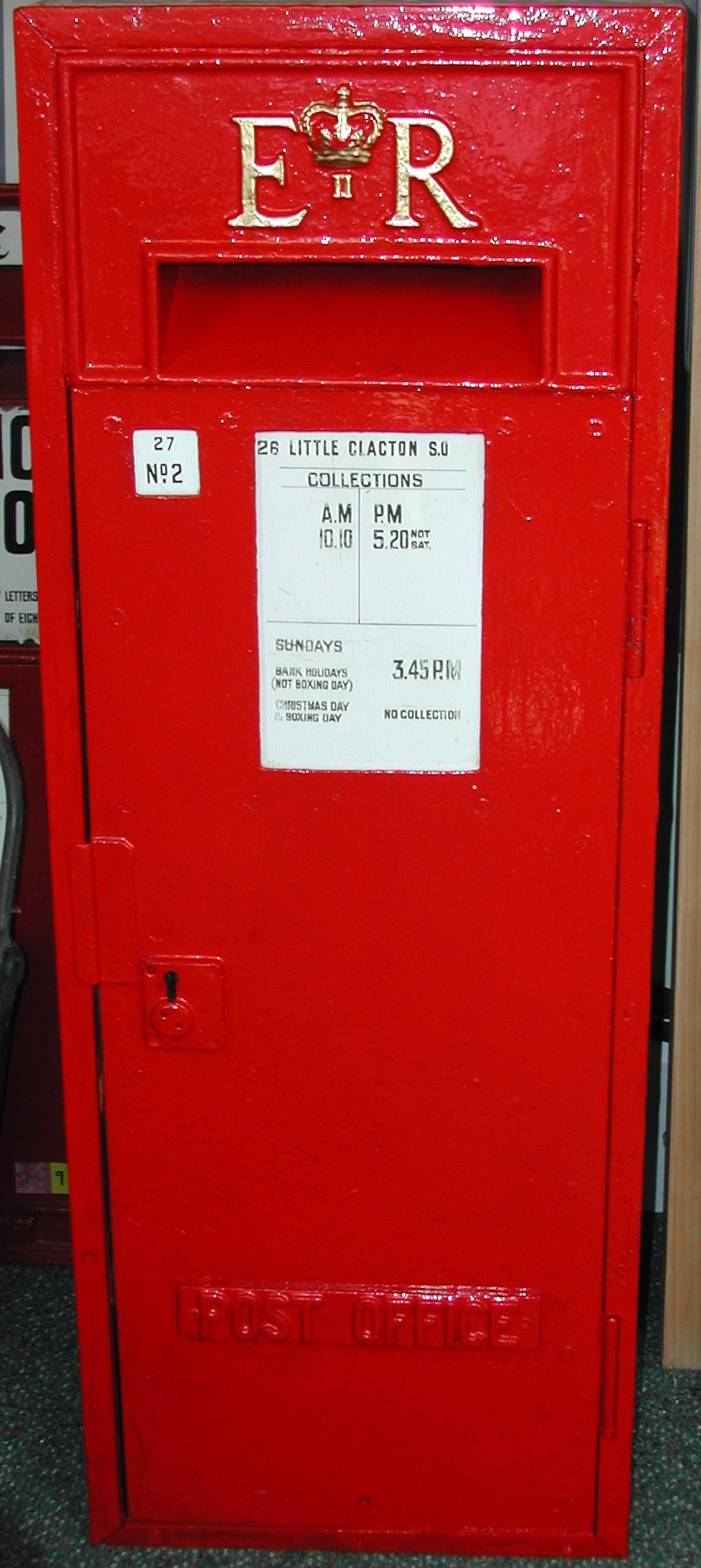
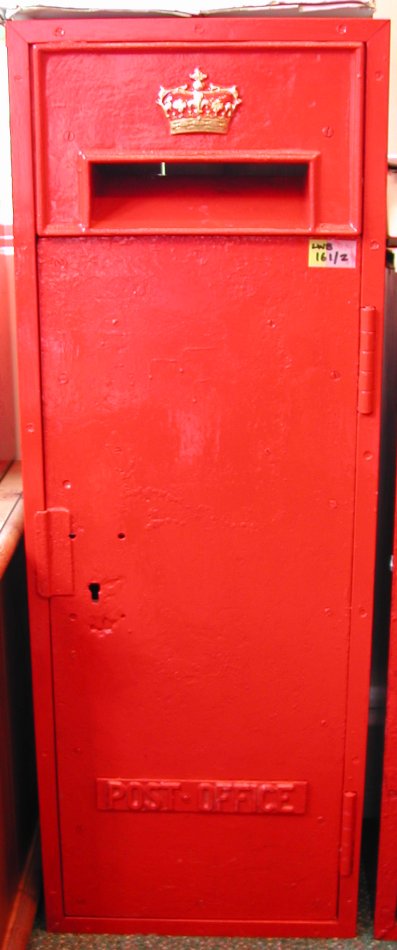
The first Ludlow to join our collection came from Thrilby in Yorkshire via a Mansfield-based collector. It is of the later type with the simple Post Office casting rather than an ornate enamel plate seen on the one next to it. It has no collection plate (LWB 173/2). The box with the EiiR enamel plateis a composite box made up from spare parts (LWB172). Our latest box is the larger version of this Ludlow which was formerly at Wivenhoe Cross in Essex. It came as a kit of parts, but is now fully operational and fitted with the original CP from nearby Little Clacton SO. This one does have the special recess for the CP and the tablet. (LWB 160/1). Next to it is a Scottish Crown Ludlow of a similar type which had to be assembled from spare parts. (LWB161/2)
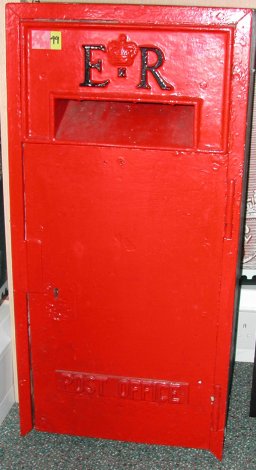
Left: Later style with cast Post Office on door
Right: Early style (1952-3) with full enamel plate
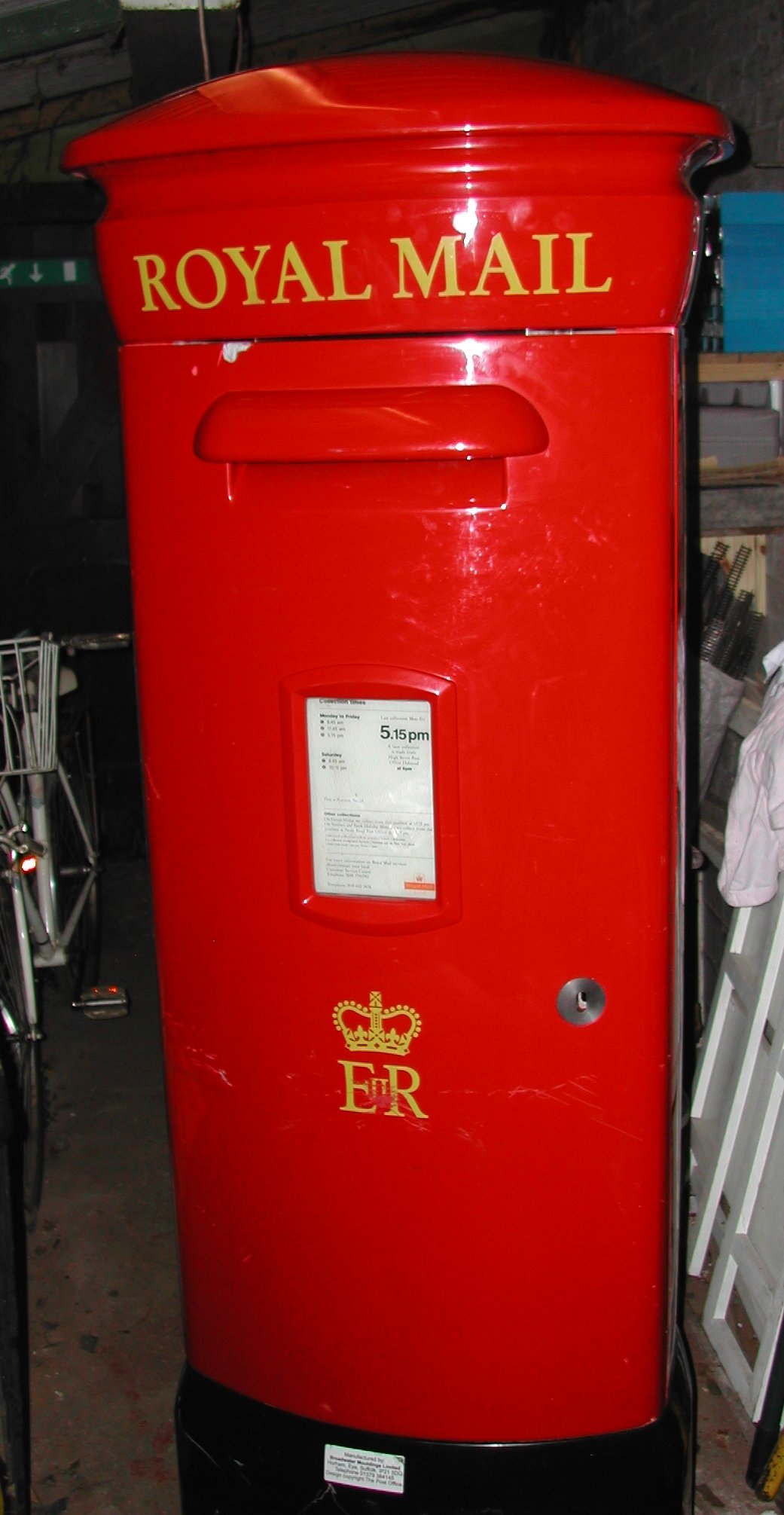
In addition, it seems to take a non-standard pillar box lock, as there are no raised blocks on which the lock can mount. After extensive cleaning to remove caked on masking and gaffer tape, it was fitted with a local collection plate (Halstead box 27) to represent the box recently installed in the new Halstead FSPO. This varient of the Broadwater box has Royal Mail in all upper case script and so is technically a PB58/3.
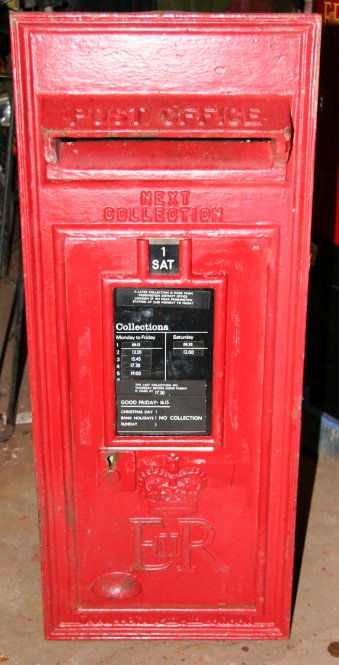
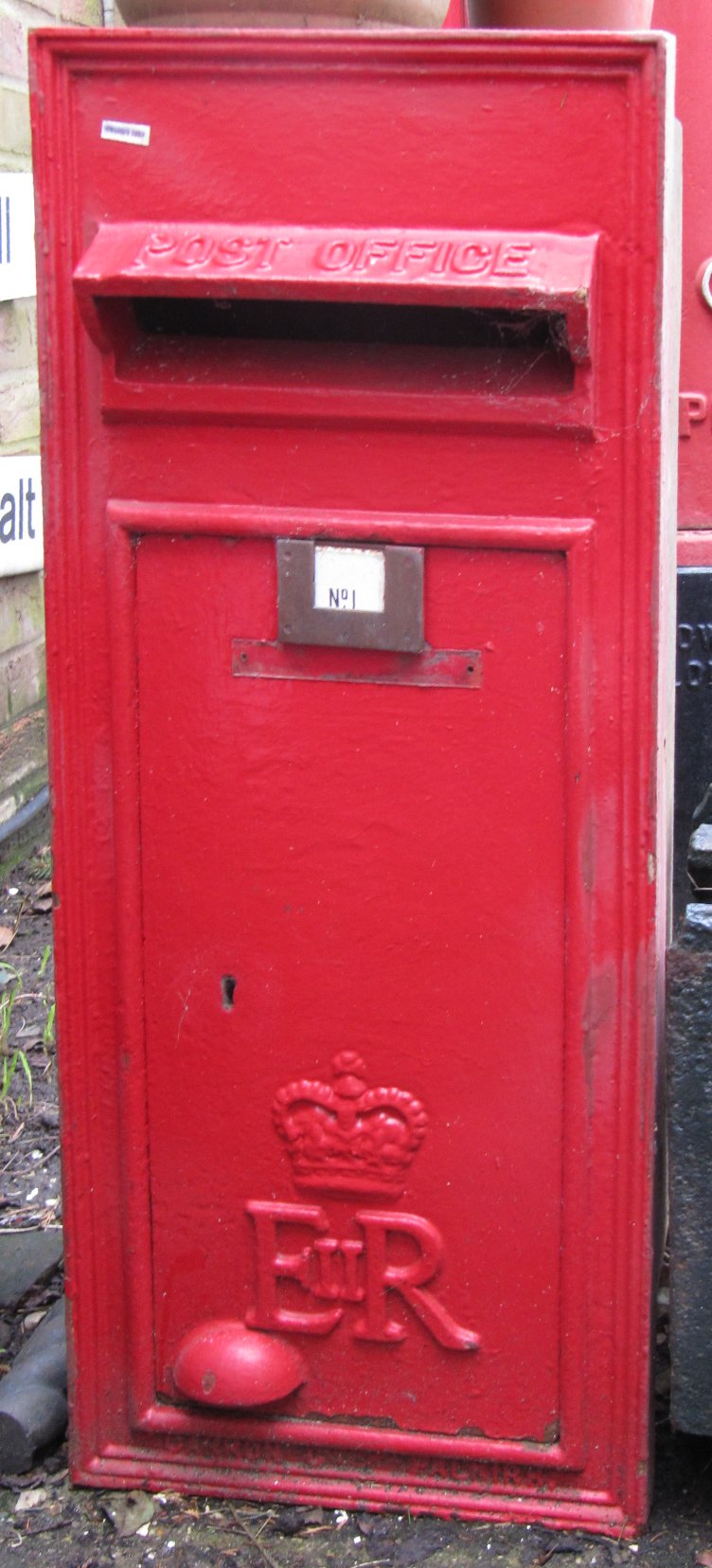
This Carron box sports the full 10" wide aperture in an E size box. It was previously located at Cavendish SPO Suffolk.